Stress and emotional well-being affect the whole body. This section covers the Lüscher test and reflections on self-knowledge and on tears and their meaning.
The following sections go into the individual topics in more depth.
Lüscher test
The psychological-somatic meaning of the colours
| TEST COLOUR | PHYSIOLOGICAL | PSYCHOLOGICAL |
|---|---|---|
| yellowish red | Stimulation, excitation | Activity |
| dark blue | Sedation, calm | Contentment |
| blue green | Contraction, tension | Firmness |
| light yellow | Dilatation, release | Change |
Just as music embodies a highly differentiated expression of feelings, the language of colours is an immeasurably rich and precise representation of the emotions. The sensory perceptions triggered in the process are measurable, objectifiable and, particularly important: reproducible. Thus, when looking at the colour Lüscher red, the pulse, the breathing rate and the blood pressure rise. Conversely, these neurovegetative functions fall through calming colours, such as above all the dark Lüscher blue.
Colours are an international “language” that is not tied to any culture. It addresses precisely determinable feelings in a definable way. Advertising makes use of this. Thus the Marlboro cigarette was able to achieve an increase in sales of 2000% in Switzerland as early as the first year through a new design of the pack, without changing the quality of the tobacco. As a counter-example, a best-selling Swiss nut chocolate could be named. Previously packaged in the right brown and green, years ago there was a wish to modernise it with white and black, colours alien to enjoyment. The chocolate disappeared from the market within two years. Such examples prove how colours influence the buyer and that he understands the language of colours immediately. The hot and cold water taps are distinguished by red and blue. Everyone expects hot water from the red knob and cold water from the blue knob. The red stop light signals danger and is not merely convention: red is exciting and stimulating like danger.
Alongside this objective meaning of the colours, it has been scientifically proven that cell cultures grow almost twice as fast under irradiation with red light.
The clinical Lüscher colour test
The colour test is an objective measuring instrument for assessing the subjective psychological-somatic state. The personal preference for or rejection of a colour shows the attitude and the subjective personal state of well-being, similar to the weather situation on a barometer. What is decisive is.
- 1) the objective meaning of the colour perceived.
- 2) the subjective attitude towards the colour.
In contrast to consciously controlled language, the decision for or against a colour is made unconsciously. The test colours measure the person as he really is and not - as in a questionnaire - as he sees himself, or as he would like to be seen.
Studies at American and European universities have demonstrated with statistical significance that with the “Lüscher colour test” an exact, concordant psychological assessment is possible for the first time.
Colours are preferred or rejected depending on whether we want or do not want what they signal. For this reason, the personal evaluation of the test colours allows conclusions to be drawn about emotional behaviour and the psychological-somatic state. Example: dark blue embodies: “calm”. If it is preferred, there is a need for calm. If, on the other hand, it is rejected, it means: “restlessness”. A preferred, exciting orange-red shows a desire for activity and challenge. If rejected, it means: “exhausted through excessive demands”.
Most important for the assessment are the compensatory favourites and rejections. They show both in what way psychological-somatic regulations are disturbed and the causes of conflicts that can result in psychosomatic symptoms.
The test procedure
From the corresponding charts you select your colours in daylight. Taking the test requires about 5 minutes.
From thousands of analyses, the individual areas of the personality are described individually and in detail on about 6-8 computer pages. The current state is set out in tabular form in comparison with the psychological-somatic constitution, taking the potential for conflict into account. The texts explain, among other things, the control of the ego, compensations, overstimulation, blockages, expectations, the relationship with the partner and performance behaviour. In addition, proposals for therapy and homeopathic constitutional remedies are proposed.
Prof. Max Lüscher
In his youth he read the collected lectures and interpretations of dreams by Sigmund Freud. Then he studied all the writings, from Aristotle to the present day, that could be read in the university library on physiognomy. At the age of 16 he found (1939) a method by which the psychological state can be defined via the contraction of the individual facial muscles. In doing so he developed a characterological system of his own. It forms the first dimension “directive-receptive” and the second dimension “constant-variable” of his present-day regulation psychology. In the period from 1938 to 1941 Max Lüscher also studied the graphology of Ludwig Klages and used his characterology to supplement his own.
Link
Self-knowledge
Creation and I
Dr. Anton Rajmon (1930-2011)
Ovid, poet of ancient Rome, described 4 ages in a saga as follows: In the first, the “golden age”, people live in divine order and harmony. Illnesses and crimes are unknown, and accordingly they need neither physician nor judge. They reach a very great age in full health and pass away without pain. It is the period of spiritual upswing and progress. In the following “silver age”, the decay of faith and order, accompanied by illnesses, begins as a consequence of the boredom of every life of prosperity. In the third, the “copper age”, this continues, only to let faith and morals sink to their lowest point in the last, the “iron age”. Material addiction to pleasure, criminality and illnesses shoot up to their peak.

In his book “The Crisis of Our Age”, which appeared as a bestseller in the thirties of the last century, Sorokin, an American sociologist of Russian descent, states that, analogously to Ovid’s story, the spirituality of our civilisation is in its last phase of decline: a large part of the population lives only on the surface of things, in the sensory illusion that the physical body is the creator, the bearer and the goal of its existence in the world. For this reason man confuses his striving for power, money and fame with the meaning of life, and his sensory stimuli determine his actions. Yet the quickly passing pleasures cannot satisfy him in the long run and cannot give his life any deeper meaning. Thus he falls into an inner crisis which is actually meant to bring him to the insight: the goal of human evolution cannot be a transient life in a physical body, but an eternal life in a godlike body of light. Pain and illness function as an early warning system with which his inner physician endeavours to bring his derailments back into the divine order. The human discord and inner conflict between the “actual and target” state of his present stage of development are the birth pangs of an inner upheaval.
This existential discrepancy, which Sorokin already largely recognised, is joined today, some decades later, increasingly by yet further destructive factors of decline which intensify the pressure of upheaval: stress, environmental pollution, electrosmog, manipulated and unnatural food, addictive substances, unemployment, loneliness and the ever more difficult search for a truly meaningful and satisfying bond and occupation. This “ailing” of today’s civilisation, together with our hereditary burdens (miasms according to the founder of homeopathy, Hahnemann), is the actual source of many of our illnesses. Here too lie the roots of the unaffordable explosion in costs and of the failure of our health system.
Medical treatment and complementary medicine, which offers the patient help in supporting his own healing powers and strives to support his own healing powers, depends on the cooperation between physician and patient. Firstly, a willingness is demanded of the patient to give up his wrong attitude to life and his wrong habits of life, particularly his passive consumer behaviour. Health has to be earned and worked for. Secondly, he has to learn to recognise, to accept and to let go of his errors in thinking, feeling, wishing and willing. On the physician’s side, what is needed is an explanation of the methods of examination and healing available as well as the disclosure of their real limits. This is meant to offer the patient the possibility of searching for the roots of his complaints outside the consultation too, in order then, together with the physician, to reach a realistic therapeutic goal by the shortest route.
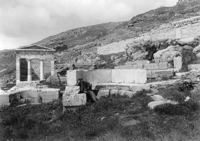
Our life consists of doing and letting go. Decisive for the first is the intellect, for the second the confidence of the heart: our guidance and our life is the love and wisdom of God. With this confidence an “inner turning back” begins and gradually makes us capable of our own inward contemplation. Its intensification leads finally to the experience of unity with the Creator (=enlightenment, rebirth of the soul). In this way man gains his own experience of the good news of the Gospel of Jesus and fulfils the old exhortation, written three thousand years ago on the temple of Apollo in Delphi (right): “Man, know thyself and you will know God within you”.
Creation and I
The primary task of medical research and action should help us to a dignified and optimal quality of life during our earthly sojourn. Despite all efforts, what ultimately remains unavoidable at the end of our worldly existence is the encounter with death. A phenomenon which, from the point of view of nature, is thoroughly meaningful and necessary for “creation”.
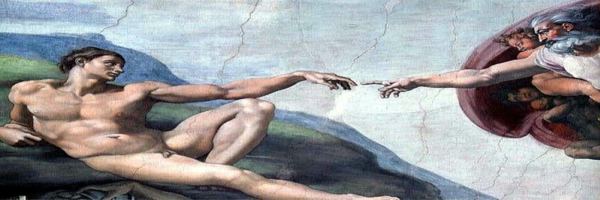
Creation stands in direct dependence on transience, for creation means making, change and new beginning. A new beginning without an end would be unthinkable! Thanks to this fact, creation will last eternally and life will move continually and develop anew. True life knows neither slumber nor sleep and is eternally a self-acting stream of expanding perfection. This perfect activity and joy of life arises of itself from the fundamental law of love. With death too we make friends, for it is a makeshift to free us from a garment that can no longer serve us for the completion of life. If the physical body becomes so incapable that the personality that inhabits it can no longer use it in the striving for completion, nature itself intervenes and dissolves the limitation.

Grief at the death of a beloved person is in reality indignation against the effect of this law, which was created in order to grant new and great possibilities of resting and waking. Nothing in the universe runs backwards, everything moves forwards towards ever greater perfection. “The human part” of our being should know that no one can ever leave our universe and that the one who has passed on can only be in a better place than the previous one.
If it is real, true, divine love that fills and binds us, then it will never cease and must sooner or later draw us again to the being that we love. Therefore true divine love knows no separation through death. That which makes us feel a separation is not love. The feeling of separation is merely one of the illusions of the personal self, in which it still persists because it does not understand the nature of consciousness.
If we think of a beloved person, we are, with our higher thought body (mental body), really with him in the same instant in which our consciousness dwells with the other person. If man could understand this truth, he would burst the chains that cause such mourning. Such grief arises only from the fact that the personality, particularly in its feelings, regards the body as the actual individual being, instead of recognising that the body is only a garment that the inner man wears. Everyone should master this garment completely and constantly and bring it to steady, joyful service. Whoever truly loves another being wishes it to be happy and at peace. If this being now chooses, through so-called death, a better opportunity for future expression, we should not wish to hold this being back in a state of imperfection.
Ignorance of this truth binds people in their self-made chains of limitation. This kind of ignorance binds the expression of life of the human race and creates a stubborn refusal to understand life correctly. Every year it draws millions of people into the depths of despair. This wrong attitude to life not only prevents the fulfilment of all that alone is worth living for, it also robs the being of its abilities and plunges it into the bonds of self-pity. If the individual being wants to win its victory and attain mastery, it must affirm its transience without ever wavering. Through their incorrect thinking and acting, people have created an evil obstacle on this earth: through the fear of death they prevent their high-striving, wonderful beings from winning freedom and using the full power of divinity which has belonged to them since the beginning of creation as the gift of the FATHER to his children.
Tears and their meaning
When I took part in the service for Eternity Sunday on 24 November 2019 held by Pfrn. Sibylle Forrer in the Reformed church of Kilchberg, I was privileged to experience one of the most beautiful sermons. It touched me most deeply and has accompanied me ever since on my path as a physician.
When did you last cry? And what was the occasion? Grief for a beloved person? Anger at an injustice suffered? Joy at a kind gesture? Crying is not tied to one particular emotion and can be the expression of quite different stirrings of feeling; from abysmal despair to the soaring flight of happiness. Crying is - like laughing - an archetypal form of human expression which can be controlled only to a limited extent and is understood at once by all people. Even if people do not speak the same language and have a quite different cultural background, crying - and laughing too - is understood at once. It is an international language. Crying is, moreover, the first means of communication that we human beings have. An infant cries to make sure of attention and to signal its needs. Even before a human being laughs, he cries.
Why we human beings cry has been studied in depth by many researchers, and yet no clear result has been reached. Does a person cry because he wants to draw the attention of those around him to his emotional state and is calling for social interaction; look, I am crying, please take me in your arms. Or does a person cry because it brings him relief, crying as a protective reaction of the body and the psyche; I cry in order to release tension and to be able to process emotional impressions better. Small children show us that both are probably true: a person cries in order to draw the attention of others to his needs and equally in order to be able to process the world, life and all impressions.
The physical ability to cry is common to all people. The way crying is dealt with, however, very different. Depending on the cultural context, different customs apply. While in certain cultures public lamentation is socially anchored and in part also ritualised, in our latitudes crying is regarded as a private matter. Anyone who cries in public at times causes irritation. Roger Federer’s tears after victory and defeats at major tournaments gave rise to all kinds of discussions, about him as a sportsman, as a human being, as a man, indeed even as a father, in that a journalist had written in an article what image his children might have of him if they saw him crying on the tennis court. Politicians are at most permitted to cry at their resignation, earned after years of hard work; otherwise it is quickly regarded as a sign of weakness. In the case of women politicians, crying is judged differently again: they are then regarded as - typically female - excessively emotional, or as manipulative, but if they do not cry at all - like Angela Merkel, for example - then somehow that is not right either and they are quickly described as cold-hearted and emotionless. The sexes are granted a different measure of crying and it is also judged differently. While crying was long regarded as “unmanly”, we know today that people - entirely independently of their sex - are built at different distances from the water, as the popular saying goes.
There are people with whom it takes little and the water runs from their eyes. And there are others who do not shed a tear even in the deepest pain. So it is by no means only the person who also cries who is sad. Crying is only ONE possible expression of emotions.
What is certain: crying, or rather being able to cry, is part of being human. More than that: crying is part of life. A dead person no longer cries. It is one of the first things to happen after death that the tear ducts no longer produce any fluid. Crying is a sign of life.
The Bible knows many tearful stories and tells of people who weep. Abraham weeps for his wife Sarah, Jacob mourns for his favourite son Joseph, whom the brothers have sold, and will not let himself be comforted. David almost goes mad in his grief for his son Absalom and no longer finds his way back into an ordered life. The biblical stories know of the break in life that grief can bring with it. Everything falls apart. Everything has to be put in order anew. Organised anew. That is painful, strenuous, at times protracted - and it does not always succeed.
Jesus too weeps. The evangelist John describes Jesus’ reaction to the death of his friend Lazarus briefly and without flourish: “Jesus wept.” Jesus weeps in the face of the dead Lazarus, although he had only just preached of his resurrection. The trust that death does not have the last word did not console him for the loss of his friend. Jesus’ “eyes” - as Luther translated it - “overflowed” with grief. He gave free rein to his emotions, to his grief. What Jesus experienced, many who mourn experience too: there is indeed the trust and the hope that with death not everything is over, that the person who has died is now “well off” or even “better off”, and Jesus’ promise holds for us unconditionally, that in life and in death we are sheltered with God. This trust is comforting and gives a sense of shelter. But it cannot erase the loss. The pain that the beloved person is no longer alive, no longer in life, remains and it makes us sad. This pain usually heals at some point, bit by bit, with time. Where at first there is a gaping wound, at some point there remains a quietly throbbing scar. This healing process is individual, sometimes tearful, sometimes silent, and every person should be able to go through it in his own way.
God too weeps. The prophet Jeremiah describes how God has to weep over the fact that people do so much wrong. It is a desperate weeping in which grief and rage, despair and wrath resonate. Even if this image of a vengeful God is difficult in various respects, it nevertheless also has something very comforting about it: God is described here as a God who does not accept the injustice of this world. God, who fights passionately for the good of people and of the world. God, who feels with us, suffers with us, mourns with us. God, who weeps. The belief in God, who weeps over the misery and the injustice of this world, is often a comforting thought for me when the pain of the world threatens to overwhelm me in the face of all the terrible news.
And in the face of the many injustices in our world, in the face of all the dead who ought not to have been dead for a long time yet, of all the tears that are shed, one wishes at times for a new world.
“I saw a new heaven and a new earth; for the first heaven and the first earth passed away.” This vision stands at the end of the biblical scriptures. It is their comforting end. The concrete description of this new world with the royal city of Jerusalem is probably rather foreign to us and has its place in the cultural context of that time. The words that follow this description, however, come very close to us. It says there: God will dwell with the people “and God will wipe away every tear from their eyes. Death will be no more. Mourning, wailing and drudgery will be no more either”.
God will wipe away every tear. In my view there is hardly a text in the Bible that describes a more intimate relationship of God to human beings. To wipe away someone’s tears is a gesture of the most intimate closeness. We let hardly anyone come so near to us. Parents wipe the tears from their children’s eyes. Perhaps lovers from each other’s. “And God will wipe away every tear from their eyes.” God comforts. Infinitely intimately. Every single tear, the big ones and the small ones, those sobbed out and the silent ones, those streaming and those run dry, all of them are wiped away by God, all of them seen by God.
“Beyond the door there’s peace I’m sure / and I know there’ll be no more / tears in heaven”, this line from the world-famous song by Eric Clapton is probably familiar to many of you. Clapton wrote it in order to come to terms with the death of his son, only four years old, who died in an accident. The song expresses the comforting hope that we all like to put into words with regard to death: death brings peace, it brings the end of suffering. The song expresses the same hope as the text from Revelation: being with God - heaven, as Clapton sings - is what awaits us all.
In contrast to Clapton, however, the text from Revelation says that there will be tears there. Both - the vision from Revelation and the lines by Clapton - describe peace, a state without suffering, without mourning, without pain. But in Revelation there are still tears. These are Tears in Heaven. There are still tears because these tears are also what makes us who we are. Because the story of our life is reflected in them. And because we are not lost through our death. Because our life story remains. Our crying and our laughing echo on. We are held safe with God with our whole life story. That is the promise that sounds in the vision from Revelation. None of our tears remains unseen, none is lost. And God will wipe away every tear from our eyes.
As a child I was given a handkerchief by my mother. A cloth handkerchief which has a girl in a meadow printed on it and is decorated with a red hem. She gave it to me when I was once crying bitterly; I no longer know the reason. From then on I often carried the handkerchief with me. In my trouser pocket, in my school satchel, later even in my handbag and today in the pocket of my gown. The handkerchief had become for me - quite unconsciously - a symbol that - whenever I need comfort - someone is there who sees my tears and wipes them away.
Dear congregation
We all need people who are there for us when we cry - be they tears of grief or tears of joy. The trust that we are not left alone with our feelings carries us through life. This trust is vital for us, and that is why we make sure of it as early as the first cry at our birth. Let us therefore be reliable companions to one another. Let us observe attentively and sensitively, and let us not shy away from showing emotions. It is they that make us human beings and in which we recognise one another, across all boundaries of communication. Let us hand one another handkerchiefs at weddings and funerals and then, when it is appropriate, let us wipe away one another’s tears.
“And God will wipe away every tear from their eyes.” There are Tears in Heaven. Because we are held safe with God as a whole person. With our very own story. In life and in death.
Amen
Pfrn. Sibylle Forrer