Your own stem cells from fat tissue: harvested once, processed to pharmaceutical quality and banked for later.
The top of the pyramid
Stem cells are regarded as one of the great promises of regenerative medicine. In our longevity pyramid they sit right at the top – and that is where they belong: first come the elimination of causes and the foundations such as sleep, nutrition and exercise. Only on this foundation do stem cells make sense.
Seegarten Klinik has been working with stem cells for 25 years – as one of the first clinics in Switzerland.
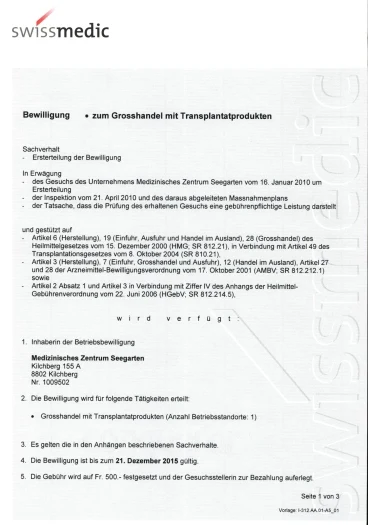
In 2010 the clinic, then under the name Medizinisches Zentrum Seegarten, was granted a licence by Swissmedic for the wholesale of transplant products. We were the first to hold such a licence. It was valid until the end of 2015 and was not renewed because our activities had changed.
Those who have taken this path can have their own stem cells harvested, processed and banked with us – and use them within the framework permitted by Swissmedic.
What are stem cells?
Stem cells are the body's reserve cells. Three properties distinguish them from other cells:
- They renew themselves.
- They can develop into different cell types.
- They are held in reserve in every tissue.
In the event of injury or disease, this reserve is activated. Often, however, it is not sufficient, or it arrives too late – and the tissue no longer heals by itself. In addition, the number and vitality of stem cells decline with age.
Embryonic and adult stem cells
Embryonic stem cells are pluripotent: they can become any cell in the body, but are ethically controversial. Adult stem cells occur in the adult body. They are multipotent, meaning they develop into a limited number of cell types, and they age with us.
We work with mesenchymal stem cells, a type of adult stem cell. They can develop into fat, bone, cartilage, muscle and tendon cells, and under laboratory conditions also into nerve and liver cells. Unlike pluripotent stem cells, they are considered non-tumour-forming.
They have two further abilities: they have an immunomodulatory and anti-inflammatory effect, and they find damaged sites in the body by themselves, attracted by chemical messengers (“homing”).
Stem cells do not act only by transforming themselves. They also release messenger substances – growth factors and other signalling molecules – that protect damaged tissue and stimulate its regeneration (the paracrine effect).
What stem cells are not
Not everything offered under this name is stem cells. Platelet-rich plasma (PRP) and mononuclear cell fractions are not. The stromal vascular fraction (SVF) is a mixture of cells that contains mesenchymal stem cells; only processing in the laboratory yields them in pure form.
Why from fat tissue?
Mesenchymal stem cells can be obtained from several tissues:
- Placenta and umbilical cord: available only at birth and with few stem cells.
- Bone marrow: a painful procedure with greater risk, which yields many unwanted cells alongside few stem cells.
- Fat tissue: easy to obtain, with many stem cells and few unwanted cells – at least a hundred times more than in bone marrow.
For adults whose umbilical cord stem cells were not banked at birth, fat tissue is therefore the obvious source. The cells can readily be expanded in the laboratory, frozen, and expanded again after thawing. And they are your own cells: there is no risk of rejection.
What we offer
Harvesting
The fat is harvested by a small liposuction at our partner clinic, the Swiss Central Clinic in Zurich. Around 250 ml is needed, usually from the abdomen. The procedure is carried out only once.
The harvesting site is given a local anaesthetic, then the fat is suctioned off with a fine cannula. The procedure takes about an hour.
- In the first two to three days, local swelling and leaking fluid are possible.
- In most cases an extensive haematoma (bruise) develops, which largely subsides within a week.
- A compression belt is worn for at least 24 hours.
- Showering is allowed from the next day, as are everyday activities.
- Allow for about one day of downtime.
If you wish, the procedure can be combined with liposuction to remove unwanted fat deposits at the same time. It then takes two to four hours. The compression belt is worn continuously for three days and then during the day for a further ten days; depending on the extent, downtime is one to two days.
Banking
Our partner laboratory Swiss Bioscience in Zurich obtains the stromal vascular fraction (SVF), a mixture of regenerative cells, from the fat, and purifies and expands the stem cells from it. Both are cryopreserved, for a period of your choice from 5 to 25 years.
Stem cells lose potency with age; once banked, they stay as young as on the day they were harvested. If cells are needed later, they can be expanded further without another harvest.
Ideally, the cells are harvested from a healthy body. It is also possible, however, at an advanced age or with existing illnesses.
Application
In Switzerland, stem cells and SVF may only be applied in accordance with the requirements of Swissmedic. At present these are:
- subcutaneous application (under the skin)
- breast augmentation
- wound healing
Worldwide, stem cells are being used in clinical studies, including for osteoarthritis, vascular disease, cardiovascular disease, diabetes, multiple sclerosis, ALS and eye disease. Whatever proves itself there and is authorised will be open to you later with banked cells. We cannot promise it.
The soil decides
Stem cells are nature's ingenious microscopic workers, devoted to repairing and regenerating tissue wherever and whenever this is needed. But for peak function, these cells and their growth factors depend on the best possible environment. It is just like planting seeds: it is not the seeds that decide whether they grow and thrive, but the soil they sprout in.
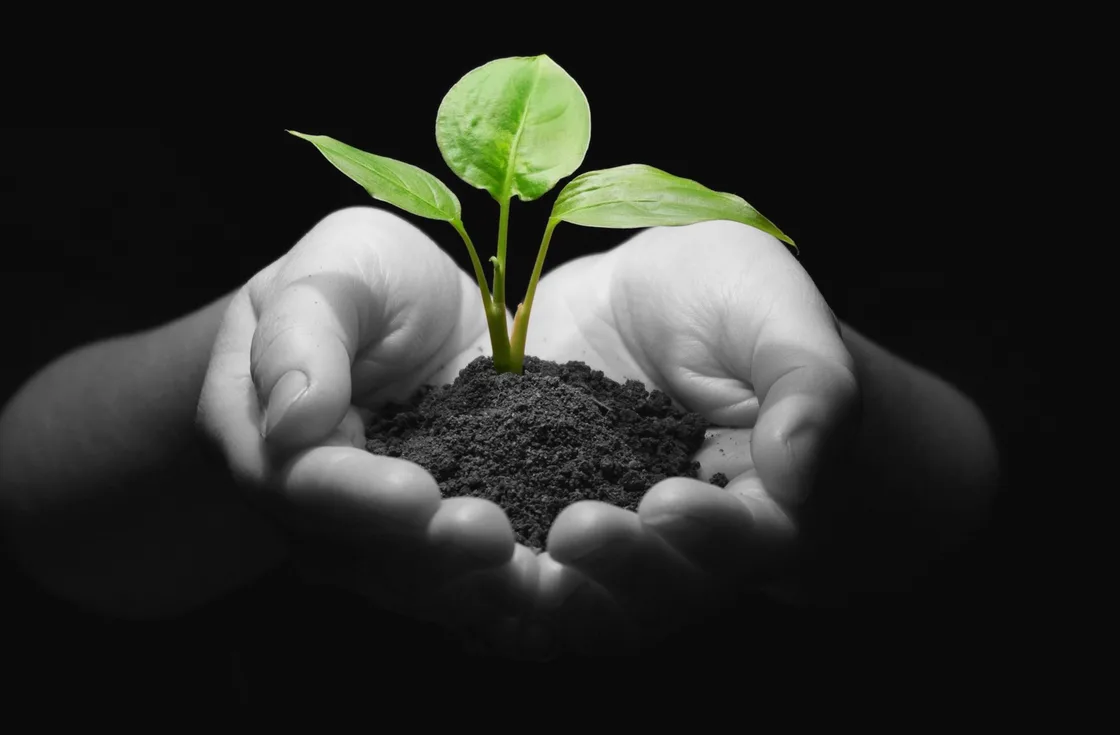
Our commitment is therefore not only to offer you optimal stem cell harvesting, but also to ensure the best possible application and follow-up – so that you achieve the best possible medical result.
During the consultation, which usually takes 30 to 60 minutes, we are interested in your personal medical history as well as your habits: smoking, nutrition, exercise. Dental issues can also affect the success of any treatment, especially heavy metals from dental amalgam or inflamed root-canal-treated teeth, which spread their toxins and inflammatory proteins throughout the body.
The best regeneration takes place in an alkaline milieu (bear in mind that the foetus grows and thrives in the very alkaline amniotic fluid). We therefore also look at your body's acidity and show you how to correct any imbalance: with supplements, nutrition and special infusions.
The procedure
- Consultation at Seegarten Klinik: we clarify whether harvesting and banking make sense for you.
- Preliminary examination at the Swiss Central Clinic and a blood sample for serology.
- Small liposuction at the Swiss Central Clinic.
- Transport to the laboratory under controlled conditions; your material is given a unique code.
- Processing in the clean room: first the SVF, then the stem cells from it. Both are tested for quality and sterility.
- Banking in vials of 5 million cells each.
- You receive a certificate of banking. When the cells are requested, a certificate of analysis accompanies them.
Quality and safety
Swiss Bioscience GmbH was founded in Zurich in 2014. By its own account, it is the first and only company authorised by Swissmedic to isolate, expand and bank pharmaceutical-grade stem cells under cGMP conditions (Good Manufacturing Practice).
Storage is in the gas phase above liquid nitrogen, in tanks with temperature sensors and alarms; backup tanks are available in case of a fault. The cells belong to you: on request, they are delivered in an unbroken cold chain to the place of treatment.
Frequently asked questions
How much time do I need to allow?
A consultation of 30 to 60 minutes, then on separate days the blood sample and the harvesting of the fat, which takes about an hour. You do not need to be present while the cells are processed in the laboratory.
Is the procedure painful?
The harvesting site is anaesthetised so that the suction itself is painless. Some discomfort and after-effects of the anaesthesia on the day of the procedure are possible; you will be informed about this in detail at the preliminary consultation.
Will anything be visible afterwards?
In most cases an extensive haematoma develops, which largely subsides within a week. The fat is taken symmetrically, and the shape of your body does not change. What remains is a small puncture on each side of the abdomen, which heals in one to two weeks and is barely visible.
Who can bank their cells?
Adults aged 18 and over. Banking is not possible in the case of hepatitis or another infectious disease. Those taking medication can usually still bank their cells; please bring your list of medication to the consultation.
Your contacts
At Seegarten Klinik you will be looked after by Dr. med. John van Limburg Stirum and Dipl. med. Simon Reichel.