Medical ozone, a mixture of pure ozone and oxygen, can be used externally and internally. Haematogenous oxidation therapy (HOT) is a photobiological process in which the patient’s blood is irradiated with ultraviolet light. Autologous blood therapies are among the oldest therapeutic procedures known to us.
The following sections present the procedures.
Ozone therapies
Ozone in medicine
The medical use of ozone (O3) was discovered over 150 years ago. In the 19th century, the recognised scientists and inventors Werner von Siemens and Nikola Tesla did pioneering work on the first ozone generators for medical purposes. During the First World War, ozone was used on a large scale to treat rampant infections. Later, the medical use of ozone became widespread in Germany and other countries. In the last ten years, the number of clinical studies has increased dramatically, which has led to a better understanding of ozone therapy.
As a strong oxidant, ozone induces antioxidant counter-reactions with a broad spectrum of concentration-dependent and dose-dependent effects that can be used for medical purposes. A considerable number of randomised clinical studies support the growing acceptance of ozone therapy for a range of indications.
Ozone as a medicine
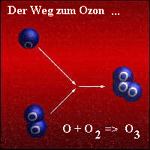
Medical ozone, a mixture of pure ozone and oxygen, can be used both externally and internally. It has a strong inactivating effect on bacteria, fungi and viruses.
Medical ozone has a very pronounced bactericidal, fungicidal and virus-inactivating effect and therefore has a broad range of application in the disinfection of infected wounds, but also in diseases caused by bacteria and viruses. Its circulation-promoting property is used in the treatment of circulatory disorders and for revitalisation. In the low-dose concentration range, the body’s own defences are mobilised, i.e. the immune system is activated.
Most important applications
- Diabetes, diabetic foot
- Circulatory disorders
- Infections caused by bacteria and viruses
- Immunostimulating
- Cancer, support during therapy
- Macular degeneration
- Prostate conditions
- Regeneration
- Wounds, poorly healing
The specific properties of medical ozone give rise to the following areas of application in ozone therapy:
- Circulatory disorders, also in the field of geriatrics
- Stressed immune system, infections
- Diseases caused by viruses, such as liver diseases (hepatitis) and herpes
- Infected, poorly healing wounds and inflammatory processes, such as leg ulcers (ulcus cruris), inflammatory bowel diseases (colitis, proctitis), burns and infected injuries, fungal infestation etc.
- As an adjunct in rheumatic, inflammatory joint diseases
- Revitalisation
Forms of application
At Seegarten Klinik, therapies with medical ozone have been carried out for decades:
- Conventional ozone treatment (blood is taken once and returned with an ozone concentration appropriate to the indication)
- Ozone bag gassing (e.g. poorly healing wounds)
- Intestinal insufflation (for inflammation, microbial imbalance, poorly healing wounds, haemorrhoids and many other diseases of the colon and rectum)
The forms of application in detail
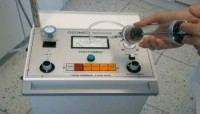
- The major autologous blood therapy in geriatrics and for the treatment of circulatory disorders as well as in diseases caused by viruses. 50 to 100 ml of the patient’s own blood are enriched with ozone and given back as a drip infusion.
- The minor autologous blood therapy is given as an intramuscular injection of the patient’s own blood for immune activation and is used for revitalisation, for the treatment of allergic diseases or generally to improve the body’s own defence.
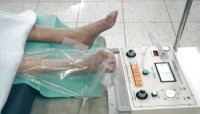
- The external treatment of wounds with the ozone-resistant plastic boot, bag or, for smaller wounds, a plastic bell. (See figure on the left)
- The rectal administration of ozone in inflammatory bowel diseases, but also for revitalisation and in diseases caused by viruses.
- The injection into joints (intra-articular) is carried out in orthopaedics for the relevant diseases.
- The injections into the arterial bloodstream (intra-arterial) are indicated in massive peripheral circulatory disorders.
Procedure and costs
Ozone therapy is a low-risk therapy and is often also carried out as a supplementary measure to other types of treatment. As a rule, a series of approx. 6 to 10 treatments is needed. Depending on the response, once a month thereafter.
Before ozone therapy, you should tell your doctor whether you are taking any medicines at that time and, if so, which ones. These medicines must on no account be discontinued without consulting the doctor.
It may be covered by the supplementary insurance for complementary medicine.
High-dose ozone therapy according to Dr. Lahodny (OHT)
What is different about high-dose ozone therapy?
By extremely increasing the concentration and dose of ozone, an improvement in the success of therapy is achieved that has not been reached before.
Procedure
The patient should drink approx. 0.75 litres of water or tea beforehand.
The blood taken from the arm vein is drawn into a sterile vacuum bottle. There, ozone is added to the blood.
The blood enriched with ozone then flows back into the body via the arm vein. This process is repeated 6 to 10 times. In one session, 1.5 to 2.0 l of blood are processed.
An OHT takes about 2 hours, depending on the quality of the patient’s veins.
As the standard procedure, one high-dose ozone therapy per week for a total of 10 weeks is recommended.
Contraindications
Acute heart attack, acute stroke, acute anaemia, blood clotting disorders. No treatment should be carried out during menstruation.
Effects
- Detoxifying effect
- Enzyme activation
- Improvement of circulation
- Activation of the immune system
See: https://de.wikipedia.org/wiki/Johann_Lahodny
Left
Haematogenous oxidation therapy (HOT)
“HOT” is a photobiological process in which the patient’s blood is irradiated with ultraviolet light.
As early as 1896, Dr. Quinke experimented with the irradiation of isolated cells and was able to observe an increase in cellular respiration. It was only thanks to the Swiss physician Dr. med. F. Wehrli that HOT could be introduced into practice. Before the antibiotic era, this therapy was used with good success above all in the treatment of bacterial and viral infections, and later it was even able to have a favourable effect after the first courses of antibiotics had failed. Today the main indication is seen in all disorders of arterial circulation.
With the patient lying down, 50 to 100 ml of venous blood is drawn and rendered incoagulable. While the cannula used to draw the blood remains in place for the later reinfusion, the blood is foamed with pure oxygen and passed by a UV light source.
The treated blood, which has meanwhile become lighter in colour thanks to the oxygen, collects in a second container, which is used for the retransfusion. After HOT it is advisable to lie down at home for another one to two hours.
All components of the treatment are single-use disposable items, so that transmission of pathogens is ruled out.
So what happens to the blood?
- The oxygen is converted into high-energy “singlet oxygen”. This activates biological processes in the body.
- Blood proteins are split without denaturation and converted into strong dipole molecules
- Immune cells are activated
- Bacteria and viruses are destroyed.
On 1)
The activated oxygen sets in motion a veritable cascade of chemical processes which ultimately produce, among other things, so-called “cholesterol peroxides”. These are energy carriers that are able to stimulate further biological processes and regulatory mechanisms in the body. The most essential effect is a marked improvement in circulation and in oxygen uptake in the tissue, which restores normal “living conditions” for the cells. The ground substance surrounding the cell clusters becomes more alkaline, and the waste products are carried away.
On 2)
The splitting of approx. 10 to the power of 18 protein molecules creates small dipoles, similar to magnets with a north and a south pole. These are able to attach themselves to diseased cells and to stabilise their membranes again. The overexcited cells can thus “calm down” and recover. This still hypothetical view is important in connection with the treatment of chronic inflammatory processes and cancers. In addition, red blood cells that have become “sticky” as a result of a lack of oxygen and hyperacidity are polarised again by the dipoles; they subsequently repel one another again, the so-called rouleaux in the capillaries break up, and the red blood cells shrink back to their normal size. This improves blood flow through the capillaries (total number in humans approx. 40 billion, with an exchange surface of 1000 square metres!) several times over, and with it the supply of oxygen to the tissue.
On 3)
It has been demonstrated that the “eating activity” of the white blood cells is activated. In addition, the B and T lymphocytes multiply and show enhanced function.
On 4)
The reason why infections heal more quickly after HOT has not yet been clarified in detail. One hypothesis assumes that the breakdown products of the pathogens that are produced by the UV radiation constitute new “vaccines”, like immunising agents, which stimulate the immune system against the germ several times over.
In summary, HOT regenerates the ground substance, the actual living environment of the cells. Our health ultimately depends on this milieu.
Main indications
- Arterial circulatory disorders
- Smoker’s leg
- High blood pressure
- Angina pectoris
- Circulatory disorder in the eye
- Cerebral blood flow
- Diabetes
Contraindications
- Overactive thyroid
- Acute bleeding
- Specific blood diseases
- Febrile infections for which antibiotics would rather have to be used.
The effect of the therapy is reduced by vitamins E, A & C, cortisone and medicines containing aspirin.
Summary of the most important processes in connection with HOT
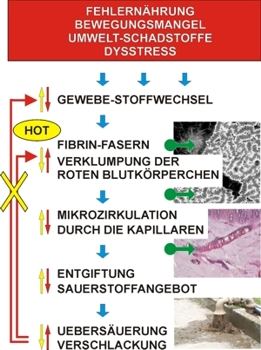
Effect of HOT
Before HOT
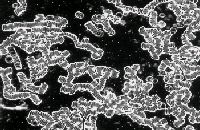
After 4x HOT
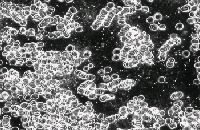
After 8x HOT
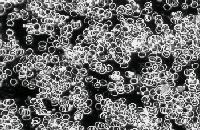
Circulatory disorder in the foot
Before HOT
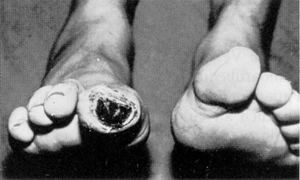
After HOT
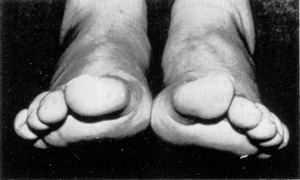
Circulatory disorder in the eye
Before HOT

After HOT

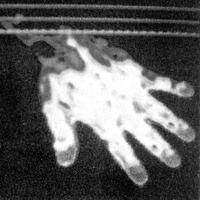
Circulatory disorder in the hands
Before HOT
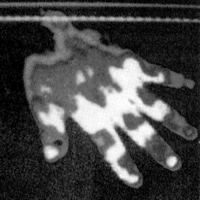
After HOT
Autologous blood therapies
Mode of action
When blood is taken out of the circulation, its quality changes abruptly: it turns from a means of transport into a remedy. This is because, after reinjection, the blood is no longer recognised as the body’s own substance but as foreign to the body, and, in a similar way to a vaccination, exerts an antigen-antibody stimulus. The manifold components of the blood, such as proteins, antibodies, immunocompetent cells and various toxins, as a colourful palette of existing and past illnesses, make the reinjected blood the ideal immunomodulator, tailored most precisely to the individual.
History
Autologous blood therapies are among the oldest therapeutic procedures known to us. As early as the 2nd and 3rd centuries BC they were used quite successfully in traditional Chinese medicine for regulatory stimulation in chronic illnesses: on the one hand in the form of needling to produce subpetechial bleeding (mini-haematomas), on the other in the form of a painful pinching massage, likewise accompanied by bruising (haematoma formation).
Autologous blood therapy only found its way into Western medicine at the turn of the 19th and 20th centuries. The Swedish physicians Grafstrøm and Elfstrøm successfully used autologous blood diluted with saline in pneumonia and tuberculosis. Then, in 1905, the renowned surgeon August Bier observed the markedly improved healing tendency of fractures following the injection of autologous blood between the fracture sites.
Thanks to good results, the indication was extended in the following years to dermatoses, chronic infectious diseases and poorly healing wounds. In that period of very limited diagnostic and therapeutic procedures, autologous blood therapy represented an enormous therapeutic advance. Only the advent of the sulphonamides in the 1930s and of penicillin at the end of the Second World War displaced this long-established form of therapy. With the misplaced hopes in the new “antibiotic wave”, the other immunotherapeutic agents and regulatory stimulation agents, which strengthen the patient’s defences, also disappeared from everyday practice.
The renaissance of autologous blood therapy
Over the course of time, the following developed from the main stem of classical autologous blood therapy
- HOT (haematogenous oxidation therapy)
- Preparation of an autonosode by serial dilution of the patient’s own blood, the use of which opens up a broad spectrum of indications (e.g. in allergies and autoaggressive diseases).
- Admixture of various substances to the autologous blood
- Addition of ozone.
Effect
Autologous blood therapy leads to an inflammatory reaction with a rise in an improved immune response. According to the Arndt-Schulz rule, small and very small stimuli lead to a stimulation of the immune system, whereas large and excessively large stimuli, that is, large quantities of reinjected autologous blood, lead to exactly the opposite effect, namely a reversible collapse of the immune system. As a “jolt to the autonomic nervous system”, autologous blood therapy is also frequently able to improve or even release energy blockages that make the treatment of chronic illnesses more difficult or prevent it.
Successful autologous blood therapy requires an immune system that can be stimulated. Severe wasting diseases, advanced tumour diseases and acute lung diseases should, as a matter of principle, not be treated with autologous blood therapy. The frequently occurring initial aggravations in particular can catapult a subacute process into a highly florid, critical state of illness. In principle, so-called initial aggravations are entirely desired. In chronic illnesses in particular, a return to an acute stage means a therapeutic success.
- Improvement in general well-being
- Psychological stabilisation, antidepressant effect
- Improvement of menopausal complaints
- Improvement of sleep and concentration disorders
- Stimulation of appetite and metabolism
- Promotion of convalescence after illnesses
- Analgesic effect in chronic pain conditions
- Anti-inflammatory effect (recurrent infections)
- Irritation zone activation of silent zones (e.g. teeth).
Main indications
- Influenza-like infection (viral flu with and without fever)
- Tonsillitis (subacute, chronic recurrent)
- Chronic ENT infections (especially chronic sinusitis)
- Pollinosis
- Acute and chronic bronchitis
- Bronchial asthma
- Weakened immune defences
- Hypotension
- Psychovegetative lability
- Allergic skin diseases
- Acne-furunculosis
- Chronic recurrent cystitis
- Soft-tissue rheumatism, e.g. epicondylitis
- Degenerative joint diseases
- Herpes simplex, herpes zoster
- Functional bowel disorders, e.g. irritable colon
- Chronic gastritis, Crohn’s disease
Technique of autologous blood therapy
The technique of classical autologous blood therapy is simple and inexpensive. A course of treatment comprises 6 to 12 sessions, twice a week. One begins with 0.5 to 1 ml and increases step by step to 5 ml of autologous blood. This quantity can be maintained over several sessions. Larger quantities of autologous blood are used in acute illnesses.
Basic rule
- Chronic illnesses: small and very small quantities of autologous blood, long treatment-free intervals
- Acute illnesses: larger quantities of autologous blood, short treatment intervals
Overall, autologous blood therapy can be described as an extremely important basic naturopathic procedure that broadens and complements the spectrum of other therapeutic procedures.
Oxygen therapy
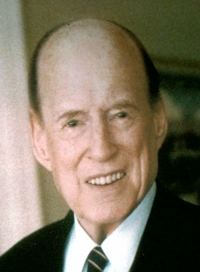
Oxygen multi-step therapy according to Manfred von Ardenne
Prof. Dr. Manfred v. Ardenne
Life is not a static state but embodies a tremendous dynamism that constantly requires energy, similar to the petrol and air requirement of car engines. Many processes in the cells, organs and organ systems depend on the action of energy-rich chemical compounds that are produced by the combustion of oxygen. Our performance therefore depends, among other things, on the uptake of oxygen via the lungs and can be measured in various ways. Bicycle ergometry has become established, in which the performance delivered is recorded at increasing wattage with simultaneous blood pressure measurement and optional electrocardiography. Olympic athletes can reach values of up to 600 watts. Ordinary citizens lie between 100 and 250 watts, depending on height, age and sex. This parameter also tells us about the current performance reserves and is of enormous importance, because these can be drawn on rapidly by illness, stress and after operations (fatigue during illness!). If the resting energy requirement of approx. 5 watts is no longer covered, death occurs. Breathlessness at rest is already a sign that the oxygen supply has reached critical limits (exception: breathlessness of psychological origin, the feeling of “not being able to breathe deeply”). We are all familiar with the decline in performance in old age.
What is striking is a generally more rapid decline in the performance curve from the age of 65 (one enters “retirement”).
In old age the energy reserves fall to 50 watts at different rates. That corresponds to the level of energy consumption in more serious illnesses, which is why death can occur in such a case through a total momentary exhaustion of energy (e.g. through cardiac arrest). The decline in performance reserves is the energetic explanation of why operations and illnesses can be dangerous in old age (death from influenza). It follows that a person can only postpone their energetic fate if they succeed in using methods that increase the performance reserves significantly and permanently, even at an advanced age.
The “steps”
Step 1
Increasing the uptake and utilisation of oxygen in the body’s cells and tissue by taking a vitamin and mineral preparation beforehand. The next step begins after 30 to 60 minutes.
Step 2
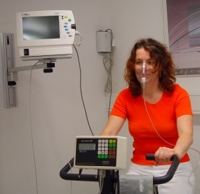
An air and oxygen mixture (approx. 95% oxygen) is now inhaled, if possible during physical exertion. This speeds up the microcirculation in the capillaries, the swelling of the vessel walls subsides and ultimately the energy status improves.
Step 3
The physical exertion already mentioned ensures good circulation and an increase in the performance of the heart and lungs.
Indications and effects
- Combating the consequences of stress
- Increasing quality of life and performance, both at work and in sport
- Reducing the danger of illnesses in old age
- Sudden hearing loss
- Reducing the risks of operations
- Speeding up rehabilitation, wound healing and bone healing
- Easing pulmonary insufficiency, bronchial asthma and breathlessness
- Cardiovascular disorders, blood pressure problems
Contraindications
- Certain forms of chronic lung disease
- Acute allergic reactions
- Epilepsy
- Overactive thyroid
- Acute infections
Procedure of the SMT
| O2 in litres/min | Physical exertion in watts | Duration of a single session in min. | Number of sessions per course | |
|---|---|---|---|---|
| SMT at rest | approx. 4 | 0 | 60 | 15-20 |
| SMT with exertion (rapid process) | 10-12 | 20 to 160 minus age | 15-20 | 15-20 |
In between, adapted exercise training. Each day let the pulse rise for 10 minutes to 180 minus age. Repeat the course once or twice a year
At the practice you receive your personal oxygen mask.
Side effects
As pure oxygen is a highly effective medicinal product, side effects can occur in the event of an overdose. They take the form of dizziness and headache. These must be reported so that the oxygen dose can be adjusted.
For using pure oxygen at home
Limmatplatzapotheke Zürich