Allergies and intolerances are on the increase, and the skin often shows what has fallen out of balance in the body. We also assess the gut, nutrients, hormones and intolerances.
The following sections go into the individual topics in more depth.
Allergies and intolerances
Just 50 years ago, allergies were hardly a disease worth mentioning. Today they are on the way, at a galloping pace, to affecting the whole population and ever younger people, with an annual growth rate of 10 per cent. It is therefore only a matter of time before every one of us reacts allergically to some substance or other in some form.
We are only slowly beginning to understand how foods influence our health and our lives. This overview explains the difference between allergy and intolerance, the possible symptoms, the assessment and the elimination diet.

Allergy or intolerance?
The two terms do not mean the same thing. There is a risk of confusion here, and for this reason even professionals often talk at cross purposes. Allergies are immunological reactions, mediated by immunoglobulins (Ig). Different immunoglobulins trigger different reactions.
The allergy: immediate reaction via IgE
The most troublesome allergy is the immediate reaction mediated by IgE. Immune cells that carry IgE immunoglobulins on their surface “catch” the allergen and release histamine and other extremely potent messenger substances, which dilate the vessels rapidly and strongly. The consequences can be redness, swelling, itching, a streaming nose, watering eyes, hives, coughing, asthma, vomiting and diarrhoea, through to shock-like states. The symptoms are violent and explosive and normally develop within minutes, at most within 2 hours. Depending on predisposition, they range from a troublesome runny nose to life-threatening anaphylaxis.
In contrast to intolerances, food allergies are rare and affect only about 2 to 3 per cent of the population. The most common are allergies to nuts (above all peanuts and almonds), eggs, milk, fish and shellfish. Because the reaction occurs immediately, the connection is usually apparent. Environmental allergies to pollen, dust or animal dander are harder to recognise, because these substances occur everywhere.
The intolerance: delayed reaction via IgG
Food intolerances arise through binding to IgG molecules instead of IgE. The IgG-mediated reaction ensures that the allergens form antigen-antibody complexes and are “eaten up” by the white blood cells. These complexes can trigger inflammatory reactions (complement reactions) and can cause the most varied symptoms even days later, in some circumstances months later. The consequences are not predictable and have so far been difficult to diagnose.
Because of the time delay, the offending foods are no longer suspected at all. The allergy has thus sunk from the “surface” into the “depths” and has “masked” itself. A food intolerance is not life-threatening, but it can markedly impair general well-being. Food intolerances are much more common than previously assumed; it is estimated that about 45 per cent of the population could be affected.
Anyone who develops complaints because of a food intolerance is often led astray medically. The symptoms have often existed for years and, for lack of “findings”, are interpreted as psychosomatic. Then only the symptoms are combated instead of the cause being treated. Remarkably, patients sometimes notice only after leaving out suspect foods how even minor complaints disappear that had perhaps existed all their lives (“You don’t know any different”).
What are the symptoms for?
The standard treatment is the suppression of the symptoms with antihistamines and cortisone. However, if the symptoms are considered not in terms of their “efficient cause” (where do they come from?) but in terms of their “final cause” (what purpose do they serve?), it immediately becomes clear: the organism is striving with all its might to get the allergen out of the body by the quickest route. Most symptoms point “outwards”. Symptom-suppressing medicines block this excretion.
It is therefore of decisive importance that our outermost barrier is intact, so that allergens do not penetrate the body in the first place. Involved in this are mucosa-protecting IgA antibodies, resident white blood cells, the condition (“permeability”) of the mucous membrane, the local blood supply, the bacterial colonisation, impulses from the autonomic nervous system and more besides. It is only thanks to the harmonious interplay of this defence orchestra that we notice nothing of the constantly running defence: the incoming “asteroids” burn up in our outermost “atmosphere” before they reach the Earth, our self. Biological therapy therefore additionally aims to influence this outermost layer favourably and to strengthen it.
How an intolerance can show itself
A food intolerance can show itself in very different ways. Some people have a single symptom, for example severe migraine. Others show a whole range: irritable bowel, headaches, skin rashes, breathing difficulties. Many suffer from several symptoms at the same time, which are often vague and hard to pin down: bloating, chronic tiredness, lethargy, difficulty concentrating, “brain fog”, general malaise. Reactions to certain foods should never be underestimated; they can prevent a normal, healthy life.
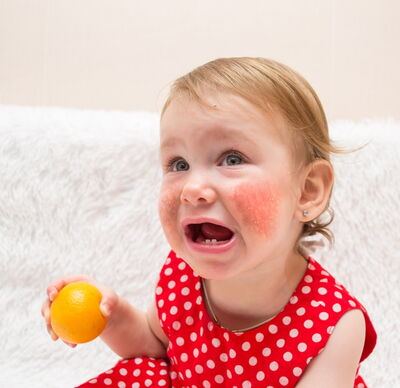
The symptoms range from mild discomfort through digestive disorders and headaches to serious diseases such as colitis, arthritis and chronic infections. Inflammation, dizziness, eczema, cold hands and feet (the antigen-antibody complexes can “thicken” the blood) and neurological symptoms are also observed. Even overweight can be the result, and in children disturbed behaviour with hyperactivity and moodiness can be rooted in food allergies.
Possible symptoms at a glance:
- Gastrointestinal disorders, bloating, diarrhoea
- Headaches, migraine
- Exhaustion, tiredness, sleep disorders, inner restlessness
- Anxiety states, depression, mood swings, irritability
- Perceptual disturbances, memory lapses
- Attention deficit disorder, hyperactivity
- Eczema, itching, acne, dry and cracked skin, brittle fingernails, dark circles under the eyes
- Asthma, hay fever, frequent colds
- Arthritis, rheumatism, fibromyalgia
- Weight problems, oedema
- High blood pressure, trembling, bouts of sweating, night-time calf cramps
- Menstrual complaints
Intolerances without involvement of the immune system
It can happen that the laboratory analyses are negative despite symptoms. This can be confusing when the complaints do occur after certain foods. The explanation: there are also food intolerances that are triggered not via the immune system but by certain substances such as lectins, toxic additives or compounds with a pharmacological effect such as tyramine. A disorder such as milk sugar intolerance (lactose intolerance) may also be present.
The most important triggers and their symptoms:
| Substance | Occurrence | Symptoms |
|---|---|---|
| Lectins | Cereals, vegetables, dairy products, soya, nightshades: potato, tomatoes, aubergine, pepper | Asthma, tiredness, behavioural disorders, irritable bowel, diarrhoea, autoimmune diseases |
| Phenylethylamine | Chocolate, mature cheese, red wine | Migräne |
| Tyramine | Cheddar cheese, French cheeses, yeast, Chianti, tinned fish | Migraine, red rashes, itching |
| Histamine | Fermented cheeses, foods such as sauerkraut, pork sausage, tinned tuna, sardines, anchovies | Red rashes, headaches, low blood pressure |
| Histamine releasers | Shellfish, chocolate, strawberries, tomatoes, peanuts, pork, wine, pineapple | Nettle rash, eczema, itching |
| Sulphites | Salad leaves from the buffet, prawns, dried fruit and vegetables, wine, beer | Asthma, anaphylaxis / shock |
| Monosodium glutamate | Chinese and Japanese dishes | Headaches, facial tension, sweats, chest pain, dizziness |
| Nightshade alkaloids | Potato, tomatoes, aubergine, pepper, tobacco | Joint pain |
| Alkaloids | Caffeine, solanines (potato family), theophylline (tea), theobromine (chocolate) | Migraine, gastrointestinal symptoms |
| Food additives | For example tartrazine, colourings, sodium benzoate | Hives, rashes, asthma |
Assessment
The prick test and its limits
The most common analysis in conventional medicine is provocation via the skin. Substances such as foods, detergents or pollen are introduced into the skin by “pricking” and can produce a reaction where there is a tendency to allergy. The procedure has weak points. Which 20 to 40 of the several hundred thousand possible allergens should be tested? In addition, the contact is unphysiological, because the first and most important immune barrier, skin and mucous membrane, is artificially bypassed. The result is frequently a false positive; the reverse is also possible. If such tests are repeated, new allergies could theoretically be produced. And: prick tests measure only the IgE-mediated reactions and say nothing about the delayed intolerances.
The IgG analysis (Food Detective)
An IgG analysis provides valuable baseline information for treatment based on nutritional medicine. It also shows how large the total antigen load is that the body has to deal with.
The Food Detective is controversial in medical circles. Standard medicine recognises only the IgE analyses, whereas the Food Detective measures IgG. In the meantime, many scientific studies and even doctoral theses on IgG-mediated intolerances have been published. In addition, the many successes with patients have confirmed that this test is justified.
Further information on the food sensitisation analyses
What you can observe yourself
- Pulse: Measure your pulse before and 15 minutes after eating a particular food (remain sitting quietly). An increase of more than 20 to 30 beats per minute indicates an allergy.
- Smell and taste: Our senses of smell and taste are our personal laboratory. Foods that smell or taste inviting at room temperature are usually less problematic.
The elimination diet
By eliminating certain foods and observing one’s own symptoms, an attempt is made to find the foods responsible and to leave them out. This method is the most reliable, but also the most laborious, way of recognising food intolerances; the low-allergen diet with slow reintroduction of the suspect foods remains the gold standard. For the patient, however, it can be an extraordinary burden.
The low-allergen basic diet
The average daily diet consists of an incalculable number of possible allergens. The low-allergen diet consists of only a few foods which, as experience shows, rarely cause reactions. Prefer organically grown products in order to exclude pesticide residues. The basic diet is followed for up to 2 weeks. If the complaints improve during this time, it can be assumed that there is an allergy to one or more foods; the reintroduction diet then follows. If they do not improve although the avoidance has been carried out correctly, a food allergy may be ruled out.
- Allowed: lightly carbonated mineral water, loose tea (avoid herbal teas). Lamb, beef, rice, maize, potatoes, fat in the form of maize germ oil. Pears, bananas (generally well tolerated), cod, trout, plaice, carrots, avocados, courgettes, green beans, parsnips, swedes, turnips. Vegetables only green or steamed; salads without any dressing. If an allergy to citrus fruits has been ruled out, a little lemon may be used for seasoning. Sauces whose composition is not known are to be avoided. Anyone who has so far eaten mainly local food begins with foreign food, for example reindeer and turkey meat. Cooked vegetables and fruit are often better tolerated, because allergens from plant foods are in many cases sensitive to heat and are destroyed by cooking.
- Forbidden at first: fruit juices, alcohol, cola, products containing milk and wheat, egg dishes, citrus fruits, wholemeal bread, cooking oil, hare, pork, sardines, fatty foods, cakes, pastries. Medicines because of their fillers, binders and sweeteners (consult your doctor!). Toothpaste because of its additives.
If the complaints persist on this diet, it is necessary to fall back, even more strictly, on an exclusively milk-free rice and potato diet, although in rare cases there may also be an intolerance to potatoes or rice.
The reintroduction diet
After an avoidance phase of 5 to 8 days, one food to be tested is eaten in addition each day. If no symptoms occur by the next day, it can be assumed that it is tolerated, and it may be included in the diet plan. If symptoms occur (for example diarrhoea or intestinal cramps), the offending food must be avoided again immediately, and the diet goes back to the last stage. One stays there until the symptoms have subsided (up to 3 days) and only then resumes the provocation with another food. The neutralisation can possibly be speeded up with two level teaspoons each of sodium and potassium bicarbonate in 140 ml of lukewarm water, drunk in one go. The foods “forbidden at first” are tested at the end.
Another variant begins with the staple foods: on day 1 in the morning a glass of cold whole milk, on day 2 a glass of boiled, cooled whole milk, on day 3 in the morning a soft-boiled egg. From day 4 the remaining foods are tested in any order, here too always only one per day (one type of fruit, one vegetable, one spice).
Suggestion for building up the diet: spelt bread (only one kind, made without milk, poppy seeds and sesame), veal (boiled or steamed), green peas, broccoli, green beans, beef, maize, melon, tomato, pineapple, apples, grapes, chicken and so on; seasoning is with table salt only. A new type of cereal only every 2 to 3 days, because the reactions are delayed. Test cane sugar and beet sugar separately.
It is essential to keep a diet diary in which the foods that are tolerated and those that are not tolerated are recorded. Note also that milk as a food additive, for example, only has to be declared above a certain concentration. Expert advice is called for here, for instance in a well-run health food shop.
Food intolerance in children
If about a third of the following characteristics are part of your child’s everyday life, there is good reason to suspect diet-related behavioural disorders. A nutritional assessment is then advisable. If your child
- Easily becomes the aggressor when dealing with other children
- Finds it hard to be in a group, has no real friend
- Has excessive tantrums for no good reason
- Breaks objects all too often
- Cannot obey
- Overruns all boundaries (keeps no distance)
- Has gone through an excessive or never-ending defiant phase
- Respects no privacy
- Behaves impossibly when visiting
- Shows no consideration for the needs of others
- Spoils every festive mood
- Is very restless and fidgety when sitting (at the table, at school)
- Has particular difficulty with fine work (writing, drawing, handicrafts)
- Has almost illegible handwriting and untidy exercise books
- Is easily distracted and scatterbrained (extremely open to stimuli)
- Makes most mistakes in the last sentences of dictations
- Obviously has more difficulty than others in keeping things tidy
- Has an extraordinary number of accidents and injuries
- Knows neither caution nor insight, consideration, circumspection or foresight
- Feels unusually drawn to fire and water (is as if addicted to danger)
- Learns nothing from experience
- Is all too careless with money
- Often cannot resist taking things that belong to others (stealing)
- Tends to be the class clown or the “black sheep”
- Does not feel cold and hunger for a long time (for example goes outdoors lightly dressed in winter)
- Has no sense of time, “dawdles” endlessly
- Cannot plan anything and cannot carry out what it has set out to do
- Has refused affection from a very early age
- Always lets affection turn into roughness
- Is exceedingly sensitive to pain or else does not notice serious injuries at all
- Never notices when it has dirty hands or clothes, but is extraordinarily sensitive to unfamiliar smells
- Eats almost nothing at the table, but is “hungry” all day long
- Lives only on “bread and jam and Ovo” and is nevertheless thin to underweight or else overweight
- Already had abdominal cramps after meals while being breastfed
- Reacted to weaning with behavioural abnormalities (sleep disorders, frequent crying, being unable to play)
- Is mostly somewhere in its thoughts, absorbed in its own world
- Always has to be called several times because it “heard nothing” (is hard to reach)
- Has difficulty sticking at something that has to be asked of it (for example homework)
- Appears able to occupy itself well, but on closer inspection always repeats a game in the same way
- Does not notice much of what is happening around it
- Mostly withdraws from the group, does not join in
- Has pronounced, peculiar “little habits” (twisting or licking its hair, spinning wheels)
- Rocks or bangs its head or body (self-stimulation)
- Wets or soils itself well into school age
- Pulls faces, grunts, blinks nervously, has tics, grinds its teeth
- Reacts to all changes in its surroundings with the greatest resistance
- Has concentration problems
- Has a reading or spelling difficulty (dyslexia) or a difficulty with arithmetic (dyscalculia)
- Has speech difficulties (pronunciation, grammar)
- Is very rarely really “with itself”
- Clearly prefers the dark colours when painting
- Is mostly out of sorts in some way (grumbling, spiteful, cheerless, depressed, “always me”)
- Is strikingly calm and responsive when it has a fever (without medication)
- Has colds extremely often (has ear, nose and throat diseases)
- Reacts in the opposite way to sedatives (for example codeine, valerian)
- Has strikingly little tooth decay (provided no Ritalin is given)
Or if you yourself have the feeling, or have the reputation, of not being able to bring up your child, although other children in your family have perhaps “turned out well”. As this list shows, the ways in which children with metabolic disorders present are very varied.
Patients' experiences
- Female patient, aged 70: recurrent diarrhoea. Food Detective positive for milk and cocoa. Marked improvement simply from leaving out chocolate.
- Female patient, aged 66: red, itchy eczema around the eyes. Food Detective positive for Brazil nuts. The eczema had appeared after she had eaten Brazil nuts; the patient had not noticed the connection because the reaction did not occur until the next day.
- Female patient, aged 27: constantly recurring itching in the nose and throat, years of visits to ear, nose and throat specialists, the treatment always the same: cortisone and antihistamines. Food Detective positive for rice. Free of complaints for the first time in years after leaving out rice.
- Male patient, aged 53: recurrent severe bloating, numerous medicines bring no improvement. The Food Detective shows an intolerance to wheat. Marked relief after replacing wheat bread with spelt or rye bread and greatly restricting pasta and ready-made baked goods.
- Female patient, aged 45: weight problems. With Weight Watchers, weight loss of about half a kilogram per week. The Food Detective shows various intolerances. After leaving these foods out, weight loss of up to more than one kilogram per week.
- Female patient, aged 45: fibromyalgia. Food Detective positive for wheat. After avoidance the complaints have disappeared.
- Female patient, aged 39: chronically tired, lack of energy. Food Detective positive for cow’s milk and eggs. After leaving these out, less sleepy and more energy.
Atopic dermatitis: general measures
- Good skin care, avoiding frequent washing, no alkaline soaps or detergents
- No clothing made of wool or synthetic fibres, underwear made of pure cotton
- Use of enzyme-free detergents for small items of laundry, rinsing underwear several times with water
- Wearing cotton gloves for dry housework, with plastic or rubber gloves in addition for wet work (no rubber gloves directly on the skin)
- Protection from irritants (chemical and physical irritation), regular use of skin-protection ointments
- Avoiding excessive sweating (it triggers itching!), although sauna is advisable once the body is used to it
- Avoiding extreme fluctuations in temperature
- Measures to reduce dust, no time spent in dusty surroundings, no nicotine!
- Avoiding contact with furry animals, no pets (high risk of sensitisation to hair and animal epithelia, especially from guinea pigs, hamsters, cats, horses and dogs, in descending order)
- Protection from contact with the herpes simplex and vaccinia virus, no smallpox vaccination (risk of eczema herpeticatum or eczema vaccinatum respectively)
- Suitable careers advice: “clean” occupations without contact with chemical contact noxae and inhaled allergens (flours, cotton dust, flowers, coffee dust, etc.)
- Dietary measures: avoiding excessive spices and foods that are not tolerated, strong coffee, concentrated alcohol, beer
- Avoiding situations of psychological and emotional stress
Autologous urine therapy
What is urine?
Urine is a sterile residual water that the kidneys have filtered out of the blood. Its content is always individually composed. It is nothing other than a part of the blood, a blood serum concentrate. Valuable hormones, enzymes, minerals, salts and antibodies collect in it, but so do waste products, products of disease and toxins.
Urine as a remedy?
A person’s own urine is the specific, individual remedy of every patient. And it is precisely “tailored” to that person and to their needs at the given moment, since it is produced by the person themselves. If the urine is returned to the body, an immune reaction unfolds there, similar to the effect of autologous blood. Autologous urine can thus also be recommended as a regulation therapy.
Indications
We use autologous urine therapy exclusively for skin diseases.
Forms of urine therapy
Drinking urine, urine fasting, urine rubs, urine compresses
Properties
For eczema, rashes and burns, urine can be recommended externally in the form of compresses.
Urine is also used successfully as homoeopathy (potentised autologous urine) when the aim is to combat symptoms of illness caused by the toxins contained in the urine. The potentisation of autologous urine is carried out (analogously to the potentisation of autologous blood according to Hedwig Imhäuser: “Homöopathie in der Kinderheilkunde”) in 30% alcohol in a centesimal dilution series up to C6 and is particularly suitable for patients in whom undiluted autologous urine either triggers too strong an initial aggravation (where there is too great a build-up of waste products) or who have not yet overcome their aversion to drinking their own urine.
Tradition of urine therapy
Autologous urine therapy is based on an age-old tradition and has belonged to the store of remedies of many peoples since time immemorial. In the Indian medicine Ayurveda, for example, it has lived on without interruption for 5,000 years to this day. Prominent Indian politicians such as Mahatma Gandhi and Jawaharlal Nehru drank a portion of morning urine every day to stay healthy despite constant strain and stress. Besides Ayurvedic and Tibetan medicine, there are age-old traditions of cleansing rituals with human urine in Chinese, Persian and Greek medicine too, and among many indigenous peoples, such as the indigenous peoples of the Americas, Inuit and Roma.
Further references:
Among Swiss contemporaries, autologous urine therapy is practised by the St. Gallen physician Dr. med. Ulrich Erwin Hasler, author of the book “A.L. - eine eigene Apotheke in dir”. The abbreviation A.L. stands for “Auto liquidum” = own fluid = urine.