Metals are everywhere
Modern civilisation is unthinkable without metals. Whether in industry, at home or in medicine, heavy metals are used in many different ways. In low concentrations they will generally not harm our health. But individual tolerance, like the level of exposure, varies enormously. For this reason, this aspect of environmental medicine must always be taken into account in the development of chronic diseases. Heavy metals have the property of inhibiting enzymatic processes in the body. Like a key jammed in a lock: nothing can be moved any more.

Today's tests offer a highly developed and comprehensive analysis of toxic and potentially toxic elements that are excreted in the urine. In addition to the classic toxins such as lead (leaded petrol, lead water pipes => food chain) and mercury (dental fillings made of amalgam), elements that are used in medicine, space travel, nuclear research and high-tech electronics can also be included. These heavy metals are being used more and more often, as the possible uses in commercial, industrial and medical fields are constantly increasing.
It is possible that, as a result of occupational or environmental exposure through the release of toxic substances into air, soil or waste water, these toxins accumulate in the body of the human being as the end consumer. Sources of exposure can also occur in metal finishing, in alloying processes, in the manufacture of components in the aerospace and machine tool industries, in the production of nuclear reactor fuel rods and in particular in the electronics industry and computer manufacturing. In other occupations, exposure to the elements measured in the profile is also possible: in military and police service (with the use of weapons), in welding and plumbing work, in metalworking, in waste recycling and disposal, in oil refining and the petrochemical industry, and in the manufacture of pigments and coatings.
It is regarded as proven that chronic exposure to toxic elements adversely affects a wide variety of bodily functions and can also impair attention and emotional abilities and weaken energy levels. In addition, it is possible that, as a result of chronic exposure, neurological development and functions are inhibited, reproductive capacity is reduced and the risk of cancer and other degenerative diseases is increased.
Furthermore, scientific studies show that adverse health effects of toxic heavy metals are being observed at ever lower concentrations of exposure. For this reason, the question arises whether there can be any minimal concentration of toxins in the body at all that is no longer harmful to health.
Heavy-metal analysis by mobilisation
This analysis examines the excretion in the urine of elements that have been taken up by the body mainly as a result of chronic exposure. The test enables the doctor to monitor the effectiveness of a patient's detoxification therapy.
The urine can be collected after a so-called mobilisation, in which the elements are flushed out of the body by the administration of a chelating agent such as EDTA, DMSA or DMPS. This makes the analysis considerably more sensitive and reliable in detecting chronic burdens. As a rule, the substance is administered intravenously and the urine is collected after 45 minutes. In the meantime, plenty of fluid must be drunk.
Preparing for the test
- No creatine supplementation (2 days before the test)
- Agreement with the doctor on which medicines and food supplements are to be stopped temporarily (2 days before the test)
Detoxification with chelation infusions
If raised levels are found in the mobilisation test, these heavy metals can be further eliminated by means of chelation infusions. For this, treatments of approx. 30 to 60 minutes are carried out. Depending on the metals to be excreted, the composition of the chelators can be optimised for the metals to be detoxified.
The number of infusions required must be discussed with the doctor. As a rule this is a minimum of 3 treatments, but under certain circumstances it can also be 10 to 20.
The infusions are not covered by the health insurers.
Chelating substances and their binding
Optimal detoxification chooses the substances that best bind the metals concerned.
At Seegarten Klinik, all detoxification options are on offer.
| EDTA | DMSA | DMPS | ZnDTPA | |
|---|---|---|---|---|
| Strong binding Good detoxification | Lead Cadmium Nickel Germanium Titanium | Aluminium Arsenic Barium Bismuth Titanium Tin | Mercury Palladium Platinum Arsenic | Lead Gadolinium Gallium Nickel Silver |
| Medium binding | Palladium Platinum Zirconium Uranium | Beryllium Cadmium Mercury Uranium Zirconium | Silver Titanium Tin | Bismuth Tin |
| Weak binding Weak detoxification | Calcium Iron Manganese Molybdenum Strontium Zinc | Selenium | Copper Zinc | Calcium Chromium Iodine Copper |
DMPS
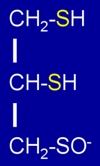
By far the most important compound for eliminating heavy metals is DMPS.
DMPS stands for sodium 2,3-dimercaptopropane-1-sulphonate. Thanks to the sulphur it contains, DMPS is a strong metal binder. The so-called SH groups (sulphhydryl groups) detoxify, among other things, inorganic and organically bound mercury.
DMPS is water-soluble and therefore not able to remove mercury from the nerve cells or from the brain. By lowering the total load, a favourable effect on the nervous system can nevertheless be expected in the longer term.
DMPS can be administered in the form of capsules or as an infusion. Intravenously, the effect is considerably more intensive and reliable, because in the oral form DMPS can bind heavy metals in the intestine and even shift them into the body. This weakens the effect and may even intensify the poisoning. For this reason, DMPS capsules must not be used, for example, where amalgam fillings are present.
DMPS mainly binds and eliminates:
- Mercury
- Copper
- Zinc
- Arsenic
- Gold
- Chromium
- Bismuth
- Antimony
DMPS is not to be used for:
- Thallium
- Silver
- Selenium
- Iron
- Cadmium
- Lead
Side effects
When used correctly, side effects are very rare.
- Deficiency of zinc and copper
- Chills
- Fever
- Skin reactions
- Itching
- Exanthema
- Erythema exsudativum multiforme
- Stevens-Johnson syndrome
- Raised transaminases
If administered intravenously too quickly (250 mg):
- Drop in blood pressure
- nausea
- dizziness
- Weakness
- Isolated cases of kidney failure as a clinical symptom of mercury poisoning
When DMPS is injected, this must be done slowly, i.e. as an infusion.
Contraindications
- Patients with allergies and asthma
- Increased risk of a side effect
- Impaired kidney function
- Acute infections
- Zinc plays an important role in the body's defences (Zinecker 1995).
Transdermal DMPS
This application is also offered on the internet and, for various reasons, is not effective or can lead to skin reactions:
- Too small an amount reaches the bloodstream.
- The zinc present in the skin can be bound, which explains the frequent skin reactions after the use of transdermal DMPS.
Beware of chlorella!
Chlorella is often used in the detoxification of heavy metals. Chlorella is an alga that is known to be able to absorb heavy metals.
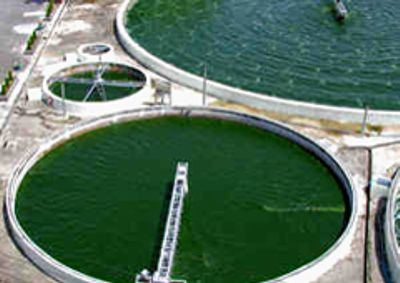
Its use is attributed mainly to the recommendations of Dr Klinghardt. Chlorella algae are used mainly in agriculture to rid contaminated soils of heavy metals again. For this, these algae must be alive and growing, because it is through this growth that they take up the heavy metals. The farmer can then collect the algae with the tractor and dispose of them. The soil is clean again.
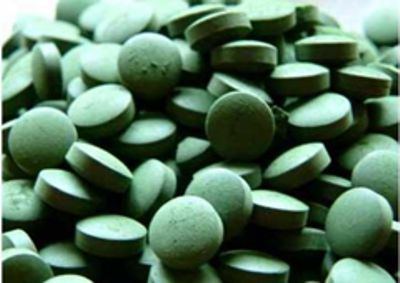
When algae are taken as tablets, the algae are no longer alive and therefore no longer able to take up heavy metals in the same way. During cultivation, on the other hand, the algae will certainly absorb all the heavy metals from their surroundings. For this reason, chlorella algae are often contaminated with heavy metals.
Studies have shown that, in a heavy-metal burden where different heavy metals come together, the symptoms can intensify one another. This was demonstrated, for example, in mice artificially loaded with mercury. Giving a tiny portion of lead on its own led to the death of most of the test animals. When chlorella algae are used, it is therefore not insignificant that additional heavy metals are taken in.
We therefore sent six different products to a specialist laboratory for analysis. It turned out that almost all of them additionally contained heavy metals, above all lead (see the mouse experiment above!), cadmium and arsenic.

What does this mean for you?
When it comes to eliminating heavy metals from the body, other products should be used instead wherever possible. In an amalgam replacement, selenium above all should be considered here, as it is able to bind the mercury and render it harmless. In addition, enzymes that are blocked by the heavy metal are freed again. This allows the metabolism to function again.
If you nevertheless decide on an algae preparation and develop side effects such as nausea, you should not increase the dose, as is often recommended, but stop the preparation immediately. Unfortunately, the recommended intakes for chlorella are in some cases quite high, so that this additional burden could become significant under certain circumstances. At least, I have come across a number of patients who reacted clearly negatively to these products, above all when they had been reassured with the words: “Oh, these symptoms show that you are detoxifying. Double the dose.” As a result, up to 100 (!) tablets a day were taken, until the side effects became so unbearable that the patients finally stopped the product of their own accord.
If in doubt, consult a doctor who is familiar with questions of environmental medicine.
Reader's email
Subject: Your online article “Chlorella algae therapy: a critical look”
Dear Sir or Madam,
I would like to thank you sincerely for your critical online article on algae preparations.
I have often observed how “carelessly and thoughtlessly” such products are taken, and are recommended by so-called “algae experts”, on the internet as well.
I myself took chlorella for only a few days and quickly felt negative reactions, such as severe dizziness, headaches, massive aching limbs and palpitations.
I then stopped taking chlorella immediately.
After just one week I am feeling better again.
More about the metals
| Surname | Absorption / storage synergy | Absorption / storage antagonism | Sources |
|---|---|---|---|
| Physiological significance | Toxic symptoms | ||
| Aluminium (Al) | Fe or Ca deficiency promotes Al absorption | Adequate Fe, Ca and vit. C supply inhibits absorption (applies to all toxins) | Al-containing baking powder, cookware, antacids, processed cheese, antiperspirants |
| Accumulates in bone, liver, kidneys, brain. Follows phosphate in the tissue. Inhibits isocitrate dehydrogenase in the mitochondria and thereby reduces alpha-ketoglutarate. Impairs bone mineralisation, binds to calmodulin in the brain and probably increases acetylcholine turnover. Associated with nerve plaques. | Headaches, fatigue, bone pain, dementia, anaemia, hypophosphataemia, raised ammonium level | ||
| Antimony (Sb) | Mg or Se deficiency promotes Sb absorption | Adequate Mg, Se and methionine supply inhibits absorption | Tobacco, solder, dyes, metal smelting and metalworking processes, flame retardants in textiles, use in rubber manufacture; exposure in mining work |
| Accumulates in adrenal glands, thyroid, kidney, liver, spleen and bone. High clearance from the bloodstream. Inhibits various enzyme systems (PFK, MAO). Binds to sulphhydryl groups. | Metallic taste, gout-like symptoms, angina, anorexia, fatigue, myopathy, hypotension, “antimony spots” after exposure to vapour | ||
| Arsenic (As) | Se or iodine deficiency promotes As absorption | Adequate selenium and iodine supply inhibits absorption | Seafood, pesticides, defoliants, chemical, electronic & photo-electronic processing, special types of glass, water |
| Organic forms and inorganic As dissolved in water are rapidly absorbed. Deposits in liver, kidneys, skin and spleen. As inhibits alpha-lipoic acid. Potential co-carcinogen and/or carcinogen. Binds to sulphhydryl and phosphate groups. | Hair loss, white streaks in the nails, myalgia, garlic odour, anorexia, hypopigmentation, hypotension, chest pain, diarrhoea, fatigue, headaches, skin inflammation, increased salivation, anaemia, reddening of the skin | ||
| Bismuth (Bi) =Wismuth | As a rule poor to moderate absorption (max. 8%) after inhalation or oral intake | By-product of lead and copper processing, in fuses, solder, nuclear reactors, luminous paints, pigments, artificial pearls, semiconductors, glazes, glasses, rubber vulcanisation, fire protection, cosmetics, and medicines (gastrointestinal, skin, disinfectants, antacids) | |
| Distribution in connective tissue and bone. Highest concentrations in kidney and liver. Can be stored in the kidney for years. Otherwise 5 to 15 days on average. Bi crosses the placenta Excreted mainly via stool and urine. | Kidney damage with protein excretion in the urine. Neurotoxic, with symptoms such as confusion, drowsiness, clumsiness, hallucinations, muscle twitching, tremor on movement, not at rest. Liver damage with jaundice. Irritation and pigmentation of the skin and mucous membranes | ||
| Lead (Pb) | Ca, Fe, Zn and phosphate deficiency increases absorption. Children and infants show 40% better lead uptake. | Ca, Zn and phytates inhibit absorption. | Paints, ceramics, tin solder, soil, newsprint, dolomite, pewter ware |
| Pb binds to haem; stored in bone, aorta, kidneys, tubules, brain, adrenal glands, thyroid and liver. Inhibits haem synthesis and possibly the mitochondrial respiratory chain. ATPase impaired. | In children: delayed mental development, hyperactivity, impaired concentration, behavioural disorders. In children and adults: fatigue, microcytic anaemia, reticulocytosis, metallic taste, loss of appetite, weight loss, headaches, sleep disturbances, nervousness, neurological disorders, glucosuria | ||
| Cadmium (Cd) | Fe deficiency with a Pb and Hg burden increases toxicity. | Adequate zinc, Ca, Mg, Cu supply inhibits absorption | Waste water, seafood, tobacco, phosphates, fertilisers, soft water, welding, mines |
| Accumulation in the proximal tubule of the kidneys. Can alter catecholamine metabolism. Reduces CYP-450. Inhibits antitrypsin. Changes in the vascular endothelium have been observed. | Hypotension, hypertension, fatigue, anaemia, proteinuria, osteomalacia, nausea, vomiting, diarrhoea, emphysema, reduced sense of smell, dry skin with scaling, kidney problems | ||
| Nickel (Ni) | Fe, Cu or Zn deficiency | Adequate Mn, Zn and Cu supply inhibits absorption | Cocoa, saturated fats, chocolate, water, dental materials, batteries (Ni-Cd), nuts |
| Contradictory effects. Accumulation in kidneys, liver, skin and brain. Promotes inflammatory processes. | Dermatitis, allergies, inflammatory processes | ||
| Mercury (Hg) | Selenium deficiency | Adequate selenium supply inhibits absorption | Amalgam, fish and shellfish from contaminated water, fungicides, paints, electrical relays, explosives |
| Accumulates in kidneys and liver. Organic Hg has a half-life of 2 months and binds to enzymes, proteins and glutathione. Inhibits MAO, catalase, P-450 and mitochondria. | Headaches, fine tremor, increased salivation, irritability, reduced concentration, metallic taste and many other chronic non-specific symptoms. | ||
| Thallium (Tl) | Adequate potassium and selenium supply inhibits absorption | Spectacle lenses, semiconductors, manufacture of solar cells, smelting processes, hazardous waste, mines | |
| Uptake through the skin, via the lungs and the intestinal tract; inhibits RNA and DNA synthesis. Inactivates riboflavin, cholinesterase and phosphatase. Accumulation in kidneys, heart, muscles, brain. | Anorexia, alopecia, ataxia, confusion, tremor, hypertension, polyneuropathy, immunological disorders. | ||
| Uranium (U) | Ca deficiency increases absorption | Adequate Ca and Fe supply inhibits absorption | Water, soil, dust |
| Accumulates in liver, kidney (prox. tubule, glomerulus), spleen, bone | Chronic fatigue, glycosuria, hyperaminoaciduria | ||
| Tin (Sn) | Adequate zinc, Fe and Cu supply | Tin-coated cans, especially with acidic foods or juices. Processed food. Industrial waste. | |
| Accumulates in liver, brain and lymph. Half-life of 5 to 100 days; inhibits P-450 and oxidative phosphorylation | Hyperglycaemia, ataxia, headaches, visual disturbances, liver pain |
Symptoms and metals
| Al | Sb | As | Ba | Bi | Cd | Pb | Hg | Ni | Ag | Ti | Sn | U | |
|---|---|---|---|---|---|---|---|---|---|---|---|---|---|
| Allergies | 1 | 1 | 2 | 3 | 1 | ||||||||
| Alopecia | 1 | 3 | |||||||||||
| Anaemia | 2 | 1 | 3 | 2 | 1 | 1 | |||||||
| Anorexia | 2 | 1 | 1 | 2 | 2 | ||||||||
| Ataxia | 2 | 1 | 3 | 2 | |||||||||
| Carcinomas | 1 | 2 | 1 | 2 | |||||||||
| Dementia | 3 | ||||||||||||
| Depression | 1 | 1 | 1 | 2 | 2 | 1 | |||||||
| Impaired detoxification | 1 | 2 | 2 | 2 | 1 | 1 | 2 | 3 | |||||
| Headaches | 2 | 2 | 1 | ||||||||||
| Hypertension | 2 | 3 | |||||||||||
| Immune disorders | 1 | 3 | 3 | 1 | |||||||||
| Impotence | 1 | 2 | 1 | 1 | 2 | ||||||||
| Tiredness | 3 | 1 | 1 | 1 | 3 | 1 | 1 | 1 | 3 | 1 | 3 | ||
| Muscle pain | 1 | 2 | 2 | ||||||||||
| Muscle weakness | 2 | 1 | 2 | 1 | |||||||||
| Neuritis | 3 | 1 | 3 | ||||||||||
| Neuropathy, paraesthesiae | 3 | 1 | 2 | 3 | 3 | ||||||||
| Renal insufficiency | 1 | 3 | 3 | 2 | 3 | 1 | 2 | 2 | 3 | ||||
| Pigmentation disorders | 3 | 3 | 2 | 1 | 1 | 3 | 1 | ||||||
| dizziness | 2 | ||||||||||||
| Tremor, spasms | 3 | 2 | 2 | ||||||||||
| Confusion | 3 | 2 | 2 | ||||||||||
| Visual disturbances | 2 | 2 | 2 | ||||||||||
| Growth disorder | 1 | 1 | 2 | 3 |
- 1) Sometimes found
- 2) Frequently found
- 3) Practically always found