Fever: from attempt at healing to supposed illness
In our society, fever is often fundamentally misjudged. As soon as the temperature rises, the fever itself is regarded as an illness and is to be lowered as quickly as possible. In doing so, cause and response are confused.
The fever is not the illness. The infection, the inflammation or another burden is the illness. The fever is the body’s targeted response to it, a highly developed attempt by the organism to heal itself.
This misinterpretation is already visible in our language: we say that someone is “suffering from a fever” and treat the raised temperature like an opponent in its own right. With fever-reducing medicines we feel better for a short time. At the same time, however, we are interfering with a biological defence mechanism that nature has deliberately activated. The lowered temperature therefore does not automatically mean that the illness has been overcome. It may be that only the visible healing response has been suppressed.
Here is the advertisement of a pharmaceutical manufacturer:

This underlines the general misjudgement and misinformation that is being spread.
This does not mean, however, that every fever is harmless or may be tolerated without limit. Very high temperatures, severe accompanying symptoms, certain pre-existing conditions and fever in infants or particularly vulnerable people require a medical assessment. What matters, however, is not to fight fever reflexively as an illness, but to assess its cause, its level, its course and the condition of the patient.
We should therefore reverse our understanding: fever is not the enemy but, in many cases, part of the solution. Anyone who fights only the temperature is confusing the body’s attempt to heal itself with the illness itself.
Fever as therapy
Targeted heat activates the body’s own healing processes
Systemic whole-body hyperthermia, also called fever therapy, is one of the most intensive therapeutic measures acting on the entire organism. In it, the core body temperature is raised in a targeted and controlled manner under continuous medical monitoring.
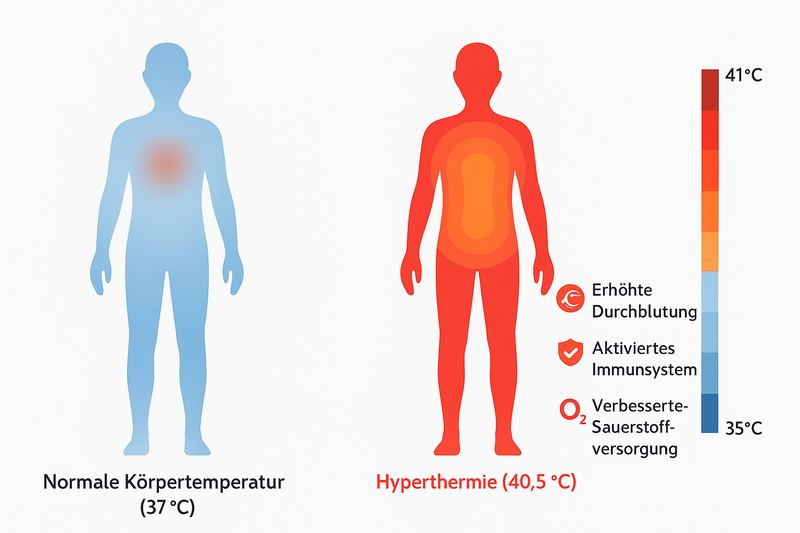
Depending on the aim of treatment, a core body temperature of between about 38.5 and 40.5 °C is aimed for. In selected intensive treatments, the individually defined temperature target can be up to 41.0 °C.
The aim is to produce a therapeutic state of fever and thereby to stimulate natural defence, regulation and regeneration processes. Metabolism, blood circulation, oxygen supply and the immune system are activated. At the same time, chronic inflammatory processes, muscular tension and autonomic dysregulation can be favourably influenced.
Fever is not an illness
Body heat is an essential prerequisite for our life. Various regulatory mechanisms in the body and in the brain ensure that, under normal conditions, the core body temperature is kept almost constant at approximately 37 °C.
When it overheats, the body increases the blood flow to the skin and begins to sweat. This allows excess heat to be given off. When it is too cold, by contrast, the blood flow to the arms and legs is reduced, while shivering generates additional heat.
This precise temperature regulation does not only serve our well-being. It is at the same time an important instrument of the body’s own defences.
Fever is therefore not primarily an illness but a proven protective response of the organism. As body temperature rises, numerous immune processes are activated. Defence cells such as T lymphocytes and macrophages respond more strongly, blood circulation increases and the growth of various pathogens is made more difficult.
While the human body can regulate its temperature by sweating and by increased blood flow to the skin, many pathogens do not have comparable means. For them, the raised temperature can become a considerable strain, figuratively speaking like being in a sauna whose door remains locked.
Nature thus uses fever in a targeted way to overcome infections and other burdens. Nevertheless, fever is often regarded merely as a symptom of illness and suppressed prematurely.
When the natural fever response fails to occur
With increasing age, in chronic illnesses, under persistent stress, environmental burdens or marked exhaustion, the responsiveness of the immune system can decline. Certain defence cells then respond less dynamically, and a natural fever response fails to occur or is only weak.
Those affected feel exhausted, ill and without strength, but hardly develop a fever any more. The absence of fever is therefore not always a sign of particularly good health. It can also indicate that the organism is no longer able to respond adequately to a burden.
Medically controlled whole-body hyperthermia attempts to provide this missing stimulus in a targeted way from outside.
How does whole-body hyperthermia work?
During the treatment, the body is warmed evenly with short-wave infrared radiation. This is the part of natural sunlight that is responsible for its warming effect. The treatment is carried out without skin-damaging UV radiation.
The heat radiation is diffusely reflected inside a specially developed tent cabin. The blood absorbs the heat and distributes it throughout the body. First the skin, arms and legs warm up. Then the core body temperature begins to rise continuously.
Sweating is desired here. Evaporative cooling, however, is deliberately prevented, because the therapeutic effect requires not only a warming of the skin but a measurable and controlled rise in core body temperature.
As the temperature rises, various physiological processes are stimulated:
- The metabolism is markedly increased.
- Blood flow to organs and tissues increases.
- The release of oxygen from the blood to the tissue is made easier.
- Immune cells are activated and their function is regulated.
- Metabolic, excretory and detoxification processes are supported.
- Chronic inflammatory processes can be reactivated and brought to regulation or healing.
- Deep muscle layers that are difficult to reach can relax.
- Chronic pain and tension can be relieved.
- Neurotransmitters and autonomic regulatory mechanisms can be favourably influenced.
- Raised cortisol levels can fall, and the state of rest and recovery can be activated better again.
After the treatment, many patients report deep relaxation, a clearer head, more energy and an improvement in their general well-being.
Oxygen supply under heat
The supply of oxygen to the tissue is an essential component of whole-body hyperthermia.
As the temperature increases, oxygen is released more easily from the blood to the warmed tissue. This is comparable to warming up before sporting activity: heat improves blood flow and makes it easier to supply the working tissues with oxygen.
During hyperthermia, the head remains outside the cabin. The air breathed in is therefore markedly cooler than the temperature inside the cabin. In addition, oxygen is administered during the intensive treatment. This supports the uptake of oxygen through the lungs, while the warmed tissue can take up more oxygen.
This can be of particular importance in tissues with poor blood flow or chronic inflammation. Oxygen not only serves the immune cells as a source of energy, but is also an important prerequisite for numerous defence and regulation processes.
The difference from the sauna
Medical whole-body hyperthermia differs fundamentally from an ordinary sauna or other heat applications such as fango or a hot bath:
- The warming takes place over several hours and not just for a short time.
- The heat is distributed evenly and reaches deep into the body.
- The core body temperature is measured continuously and raised in a targeted way.
- Evaporative cooling is deliberately prevented.
- The head remains outside the cabin.
- During intensive treatments, oxygen is administered in addition.
- ECG, blood pressure, oxygen saturation and core body temperature are medically monitored.
- The temperature target is defined individually before the treatment begins.
- Once the temperature target has been reached, a controlled heat-retention and rest phase follows.
Whole-body hyperthermia is therefore not a wellness application but a medically monitored and individually dosed treatment.
Forms of whole-body hyperthermia
Mild hyperthermia up to about 38.5 °C
Mild hyperthermia is used in particular for:
- Relaxation and regeneration
- Activation of the metabolism
- Support of general preventive health care
- Treatment of chronic tension
- Relief of chronic pain
- Support in osteoarthritis and fibromyalgia
- Autonomic regulation
- Accompanying treatment of raised blood pressure, provided this is medically justifiable
Moderate to intensive hyperthermia
In moderate whole-body hyperthermia, the core body temperature is raised to up to about 40.5 °C, depending on the indication, the patient’s resilience and the aim of treatment.
In selected intensive treatments, a target temperature of up to 41.0 °C can be aimed for under particularly close monitoring. The temperature target is always defined individually before the treatment begins. What matters is not reaching the highest possible temperature, but a strain that is therapeutically effective and justifiable for the patient.
This form of treatment is used in particular in chronic inflammation, chronic infections, marked disorders of immune regulation and as a supportive measure in cancer.
Areas of application
Systemic whole-body hyperthermia can be used as a supportive treatment in a variety of acute and chronic illnesses.
Chronic infections and inflammation
- Lyme disease
- Chronic inflammation of the airways
- Chronic bronchitis
- Chronic inflammation of the urinary tract and kidneys
- Chronic inflammation of the digestive system
- Chronic inflammation of the skin
- Skin diseases
- Chronic inflammatory complaints of the musculoskeletal system
- Bronchial asthma
Rheumatic diseases and chronic pain
- Osteoarthritis
- Arthritis
- Fibromyalgia
- Chronic back complaints
- Chronic muscle tension
- Persistent or treatment-resistant pain conditions
Immune and exhaustion syndromes
- Immune deficiency and impaired immune regulation
- Chronic fatigue syndrome or ME/CFS: improvement of crash and PEM
- Marked physical and mental exhaustion
- Burnout
- Chronic stress
- Sleep disorders
- Low mood and depression
- Autonomic dysregulation
Accompanying therapy in cancer
Moderate whole-body hyperthermia can be used as an accompanying treatment during or after conventional cancer therapy. Possible aims of treatment are:
- Activation and regulation of the body’s own immune defences
- Improvement of blood flow and oxygen supply to the tissue
- Support of regeneration after chemotherapy or radiotherapy
- Reduction of treatment-related exhaustion
- Stabilisation of the body’s own defences in aftercare
- Support of quality of life
Body temperatures of up to about 40.5 °C do not lead to a direct thermal destruction of cancer cells. Moderate whole-body hyperthermia therefore does not replace any tumour-destroying or otherwise necessary standard oncological therapy.
It can, however, be used as a supplementary treatment to support immunological and metabolic processes. In advanced or metastatic tumour diseases, too, it can be considered as an individual treatment attempt after careful medical assessment.
Preparing for the treatment
Please allow approximately four to five hours for the entire treatment, including preparation and the rest period afterwards.
The following points should be observed before the therapy:
- Please arrive on time.
- Before the therapy, eat only easily digestible food.
- Bring a small meal for afterwards, for example a banana, a sandwich or a yoghurt.
- Inform us about new illnesses and changes to your medication.
- Bring a bathrobe, bathing sandals and a change of clothes.
- On cool days, remember warm clothing and, if necessary, a head covering for the journey home.
- Cosmetic items you personally need can be brought along.
- Towels, liquid soap and a hairdryer are available at the clinic.
After the treatment you will receive tea, coffee and a light snack if you wish.
How hyperthermia proceeds at the Seegarten Klinik
1. Preparation
Before the therapy begins, the patient takes a shower. Underwear is removed so that any visit to the toilet during the treatment, which lasts several hours, is easier.
A venous access is then placed. This is used to administer the accompanying infusions and, if required, allows blood samples to be taken during the treatment.
Where medically intended, the patient first receives two ampoules of magnesium in 250 ml of Ringer’s lactate. After that, six ampoules of Pascorbin in 1,000 ml of Ringer’s lactate are administered. The infusion therapy is reviewed individually and adapted to the patient’s particular state of health.
2. Positioning and monitoring
The patient is positioned comfortably in the hyperthermia tent cabin.
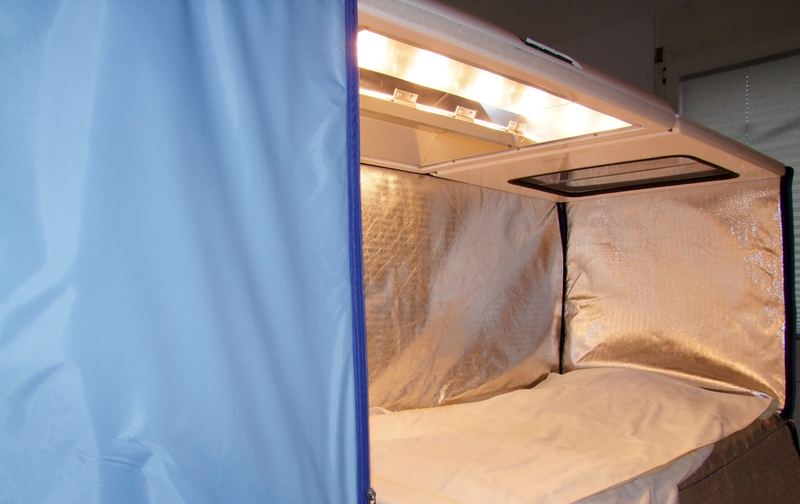
The monitoring devices are then attached:
- ECG electrodes
- Blood pressure cuff
- Oxygen saturation sensor on the earlobe
- Rectal probe for continuous measurement of core body temperature
In addition, the patient receives oxygen at a flow rate of six litres per minute.
Throughout the treatment, core body temperature, ECG, blood pressure, oxygen saturation, circulation and general condition are monitored continuously or at defined short intervals.
3. Warming phase
At the start of the treatment, one infrared lamp is switched on first. The heat intensity is increased step by step depending on individual tolerance, usually approximately every 15 minutes.
The heat radiation is diffusely reflected inside the cabin and distributed evenly over the body. The blood absorbs the heat and transports it throughout the organism.
Sweating is desired. The cabin forms a still layer of warm air around the body, which largely prevents evaporative cooling. As a result, the core body temperature rises slowly and in a controlled manner.
4. Reaching the target temperature
The individual temperature target and the corresponding switch-off temperature are defined before the treatment begins.
After the lamps have been switched off, the core body temperature often continues to rise because of the heat stored in the tissue. For this reason, all lamps are switched off as soon as the individually defined switch-off temperature is reached.
The further rise in temperature is closely monitored until the intended core body temperature is reached. In an intensive treatment, a target temperature of 41.0 °C can be aimed for, provided this is medically justifiable.
5. Heat-retention and action phase
After the lamps have been switched off, the patient remains in the closed cabin for a further 30 minutes.
In this phase, the stored heat is distributed more evenly throughout the body. This homogenisation of body temperature is an essential component of the treatment. The therapeutic fever effect can now unfold without further heat having to be supplied.
Medical monitoring continues unchanged during this time.
6. Slow cooling and rest period
Once the heat-retention phase is complete, the monitoring devices and all other materials are removed from the cabin.
The patient initially remains covered with the cabin cover. This allows body temperature and circulation to fall slowly and stabilise. This gradual subsiding of the fever is gentle on the heart and circulation.
Afterwards, the patient can continue to rest in another room if they wish.
As soon as the patient feels well and the essential vital parameters are back within the defined range, they may go home.
7. What to do after the treatment
At home, you should not shower for at least six hours.
If a shower is necessary, only warm or lukewarm water may be used. Cold showers or any other abrupt cooling must be avoided.
Sufficient rest should be planned for the day of treatment.
Duration and number of treatments
One treatment lasts approximately three to five hours, including preparation, warming, heat retention and the rest period afterwards.
The frequency and the intervals depend on the clinical picture, the patient’s resilience and the aim of treatment.
As a rule, three to four treatments at intervals of approximately one week are recommended at the beginning. A series of treatments usually comprises three to six applications. Further treatments can be given at longer intervals if required.
Accompanying treatments
Whole-body hyperthermia is often combined with other targeted therapeutic procedures. Because of the increased blood flow and metabolic activity, measures used at the same time or in addition can have a more intensive effect.
Possible accompanying therapies are:
- Infusions with vitamins, trace elements, antioxidants or amino acids
- Magnesium and vitamin C infusions
- Oxygen therapy
- Ozone therapy
- Immunomodulation
- Micronutrient medicine
- Elimination and detoxification therapies
- Psychoneuroimmunological treatment approaches
- Conventional medical therapies
Which combination makes sense is assessed individually.
History of fever therapy
The healing effect of fever has occupied physicians and healers for thousands of years. There are reports even from ancient Egypt and Greece that chronic illnesses unexpectedly improved after a high infectious fever had been survived.
The following sentence is attributed to the Greek physician and philosopher Parmenides:
“Give me the power to produce fever, and I will cure many diseases.”
In the 19th century, the American physician William Coley used fever-inducing substances to treat cancer. The Viennese physician Julius Wagner-Jauregg treated patients with advanced syphilis by means of artificially induced malarial fever and received the Nobel Prize for this in 1927.
These historical procedures were difficult to control and in some cases associated with considerable risks. For this reason, ways were sought of raising body temperature through a controlled supply of heat from outside. At first, hyperthermic baths, among other things, were used. Later, dry heat transfer by means of short-wave infrared radiation became established.
Modern systemic whole-body hyperthermia combines this historical knowledge with precise temperature control, continuous monitoring of the circulation, administration of oxygen and medical supervision.
Heat as a medical stimulus
Whole-body hyperthermia does not use a foreign mechanism. It specifically intensifies a response that nature has always used for defence and healing.
What matters here is not the highest possible temperature but the stimulus that is right for the individual: intensive enough to trigger an effect and at the same time controlled in such a way that the organism is not overtaxed.
In this way, heat becomes a medical treatment: individually dosed, carefully monitored and embedded in a cause-oriented overall concept.