A bypass or a stent treats a few centimetres of one artery. Vascular chelation therapy reaches the entire network of blood vessels.
Through an infusion the body receives a solution of minerals, vitamins and the active substance EDTA (ethylenediaminetetraacetic acid). We use it for arteriosclerosis and circulatory disorders. Including the finest capillaries, a person has around 100,000 kilometres of blood vessels. The infusion spreads through all of them.
Who the treatment helps
- coronary heart disease and angina pectoris
- peripheral arterial disease with pain on walking (intermittent claudication)
- circulatory disorders in diabetes
- before a recommended bypass operation, if surgery is not needed immediately
- after bypass surgery, a stent, a stroke or a heart attack
What happens at our clinic
Before starting we examine you thoroughly, especially your kidney values. You receive the infusions as an outpatient, 1 to 3 times a week; one infusion takes about 2 hours. A noticeable effect needs at least 20 infusions, on average 30. During treatment we regularly check urine, blood pressure and minerals.
The essentials in brief
- The treatment is not a “drain cleaner” for calcified vessels. The main focus is protection against free radicals, one of the main causes of arteriosclerosis.
- According to the research of Dr med. John van Limburg Stirum, EDTA also acts as an acid: it helps to soften hardened vessel walls and dissolve calcium deposits.
- The studies are not consistent. Whether the treatment makes sense for you, we weigh up individually for each patient.
- With the correct dose, side effects are minor. The treatment is not possible with insufficient kidney function, severe liver or heart disease, in pregnancy or with calcified tuberculosis foci.
- Health insurance does not cover the costs.
How EDTA works in the blood vessels
EDTA is a synthetic amino acid. It encloses metal ions and forms stable complexes with them, the chelates (from the Greek “chele”, claw). The metal is trapped as if in pincers and is excreted in the urine, more than 90 per cent of it via the kidneys.
EDTA opens like a claw and reaches for a metal ion, such as calcium from a deposit.
With its four carboxyl groups it encloses the calcium: the chelate is stable and holds the metal captive.
The chelate travels in the blood to the kidneys and is excreted in the urine.
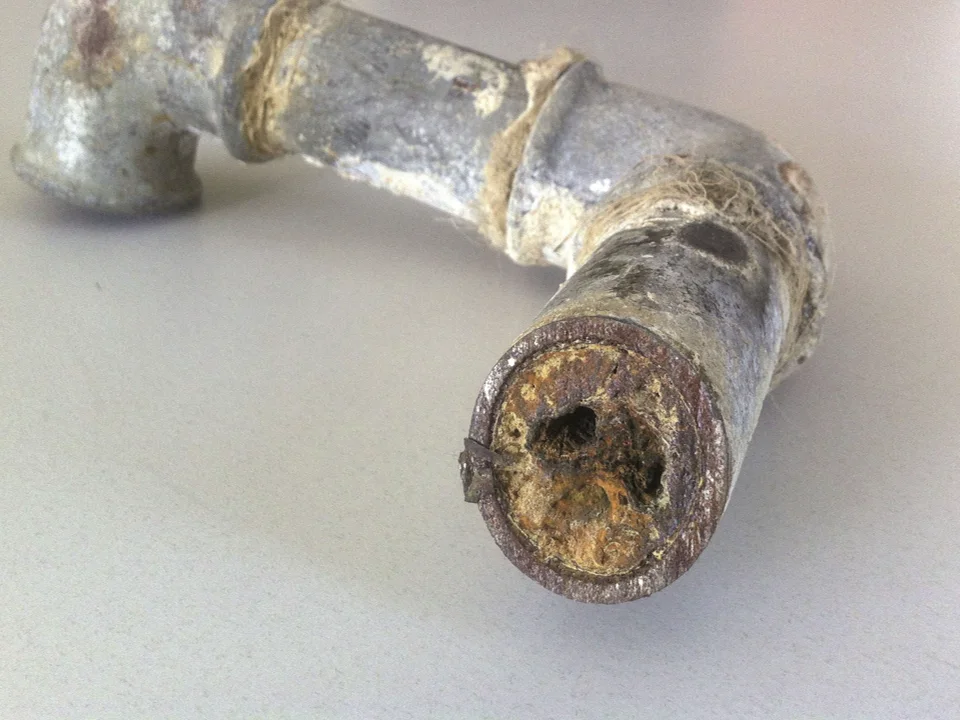
The treatment used to be imagined as a kind of drain cleaner for calcified vessels. Today we know that its effects are more complex. The main one is protection against free radicals. They are one of the chief causes of arteriosclerosis, which begins with chronic inflammation of the inner vessel wall.
- EDTA binds excess copper and iron, which drive the formation of free radicals, and so acts as an antioxidant.
- EDTA stimulates the parathyroid glands to produce more parathyroid hormone. This helps to release calcium from deposits in the wrong places, such as the arteries, and to bring it where it belongs: into bones and teeth. Protein-bound calcium is left untouched, and the bones are not decalcified.
- EDTA stabilises cell membranes.
- EDTA contributes to the balance of the prostaglandins, tissue hormones that among other things regulate blood flow.
- EDTA lowers the risk of a clot forming in the blood vessels.
- EDTA also binds heavy metals such as lead and cadmium, which block enzymes.
The acidity of EDTA
According to the research of Dr med. John van Limburg Stirum, EDTA also acts as an acid. Ethylenediaminetetraacetic acid is a fourfold acid: it contains acetic acid four times over. The infusion solution is buffered, but with a pH of about 7 it is still more acidic than blood (pH 7.4). This acidity helps to soften hardened vessel walls and to dissolve calcium deposits.
How EDTA and other chelating agents remove heavy metals: Metal detoxification.
When we use it
The heart with its coronary arteries. A: a narrowed point.
Detail A in longitudinal section: plaque with calcium deposits bulges into the artery and restricts blood flow.
The focus is on vascular disease caused by arteriosclerosis, in particular:
- coronary heart disease and angina pectoris
- peripheral arterial disease with pain on walking (intermittent claudication)
- narrowed and blocked arteries
- circulatory disorders in diabetes
- before a recommended bypass operation, if surgery is not needed immediately
- after a bypass operation or a stent, to keep the vessels open
- after a stroke or heart attack
Vascular chelation therapy can be combined with medicines for the heart and blood vessels. Medication can often be reduced during or after the treatment; your doctor decides on this. It is also possible after vascular surgery. The aim, however, is to prevent such operations.
From experience we recommend alternating or combining it with Lipid Exchange.
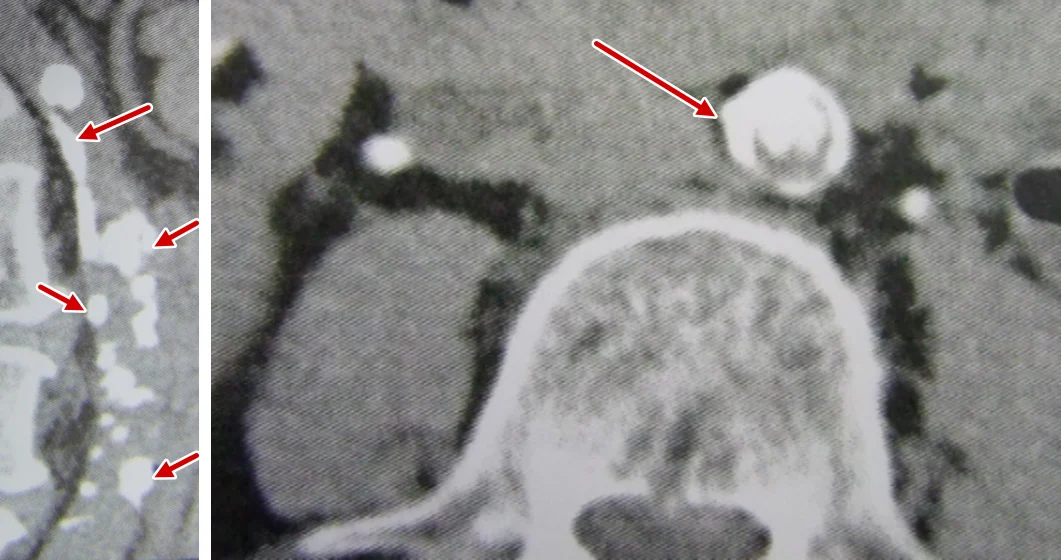
More on this: patient study on vascular calcification after calcium supplements.
What the studies show
The largest study, TACT, followed 1,708 patients after a heart attack (Lamas, JAMA 2013). With EDTA infusions there were 18 per cent fewer cardiovascular events than with placebo, and 41 per cent fewer among the patients with diabetes.
The follow-up study TACT2 tested this in 959 people with diabetes after a heart attack and found no difference from placebo (Lamas, JAMA 2024). Blood lead levels fell by 61 per cent with EDTA. As a possible reason for the different result, the researchers point to today’s treatment: many participants were taking newer medicines that did not yet exist at the time of the first study.
We therefore weigh up for each patient individually whether vascular chelation therapy makes sense for them.
Assessment and monitoring
Before we start, we examine you thoroughly, with blood and urine tests and particular attention to kidney function. During the treatment we regularly check your urine and blood pressure. Because EDTA can also remove minerals such as calcium, iron, manganese, molybdenum and zinc, we measure them about every 10 infusions.
If you take a blood thinner such as phenprocoumon (Marcumar), we monitor your clotting time closely.
How the treatment proceeds
You receive the infusions as an outpatient, 1 to 3 times a week, with at least one day’s break in between. An infusion takes about 2 hours; it has to run in slowly. If you feel a burning sensation spreading up from the needle site, we slow it down. Besides EDTA, the solution contains vitamins and trace elements, because EDTA also binds minerals and lowers the levels of vitamins B and C in the blood.
A noticeable effect takes at least 20 infusions, 30 on average. With advanced arteriosclerosis or a blocked vessel, 40 or more are needed. After that, booster infusions at regular intervals help. A healthy diet and enough exercise are part of the treatment.
Side effects
With correct dosing, side effects are minor. Occasionally, during the infusion, there may be burning at the needle site, mild pain, chills, tiredness or fluctuations in blood pressure and blood sugar. They can usually be relieved by slowing the infusion and disappear by themselves after 2 sessions. The dose and duration of the infusion are set out in a treatment protocol.
When vascular chelation therapy is not suitable
- if kidney function is insufficient
- with severe liver or heart disease
- during pregnancy
- with calcified tuberculosis lesions
Costs
Health insurance does not cover the costs (exception: heavy metal poisoning). We will tell you the costs before you start. They include the urine and blood pressure checks and all additives to the infusion, and depend on the number of infusions.
From the history of chelation therapy
The principle of chelates goes back to the Swiss chemist Alfred Werner, Nobel laureate in 1913. EDTA itself was developed in the 1930s at IG Farben in Germany, as a dye stabiliser for the textile industry.
In the 1950s it was used in the USA to treat sailors who had inhaled the fumes of lead-based red primer while painting their ship, and children who had scraped lead paint off the wall. It was noticed that in some of them the symptoms of angina pectoris disappeared as well. This was the beginning of vascular chelation therapy.
Until 1966 it was widely used in the USA; after that, bypass operations took its place. A few deaths from that period added to the uncertainty. They were caused by a far too high dose, about twelve times as much EDTA as today, which was moreover given within half an hour. The patients died of kidney failure. Since then, the dose and duration have been precisely defined.
Feedback
“After 16 treatments my blood pressure has returned to normal and the medication could be stopped. The tightness and the feelings of anxiety, especially at night and on exertion, have gone. I feel more energetic and better able to concentrate.”
Mrs R. J.
“I have now had 36 infusions. I hear and see better. What pleases me most is my memory: I greet people in the village by name again, and when I go down to the cellar I still know what I wanted to fetch.”
M. M., aged 61
“After only 5 treatments I noticed better circulation. I could run again without getting angina, the cramps in my calves at night have gone, and breathing is easier.”
I. A., aged 65
“No more back pain, the dizziness has gone completely, and I can cope with much more.”
H. B., aged 86