What do my values mean?
Don't panic about the red numbers! Laboratory results have to be looked at individually. Don't let the colours mislead you!
"Please e-mail me my laboratory results..."
Laboratory results are often requested before they have been discussed with the doctor or therapist. Suddenly you are looking at lots of red values and imagining you already have one foot in the grave.
It's not like that! Laboratory values have so-called normal ranges. These are purely statistical and often have nothing to do with health. So red values can be irrelevant, while black, "normal-looking" ones can be important for treatment.
A well-known example: iron, or ferritin. The range is enormous – anything from 20 to 300 is said to be normal. That is why values around 30 are still black and therefore marked "normal". But normal is far from ideal. If there are typical symptoms of iron deficiency such as chronic fatigue, headaches, hair loss and skin rashes, such black values may well conceal a deficiency that needs treatment.
Another example
The acid–base analysis
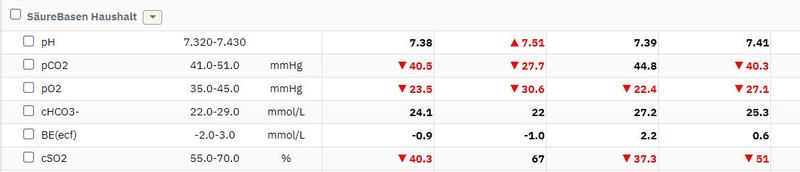
This is another classic example of "red" meaning nothing. If, for example, the oxygen content of the venous blood (cSO2) is low, it is shown in red, but it is actually a positive sign that metabolism is working and the mitochondria are intact. So the message is exactly the opposite of the impression given by the colours and normal values.
Conclusion
We are happy to send you your laboratory results – but stay calm: almost everyone has "red" values.
Don't rely on Google or ChatGPT – you'll only feel worse afterwards.
Make an appointment with the doctor who ordered the tests to find out what your values really mean
Dr. med. John van Limburg Stirum