Creation and I
Dr. Anton Rajmon (1930-2011)
Ovid, poet of ancient Rome, described 4 ages in a saga as follows: In the first, the “golden age”, people live in divine order and harmony. Illnesses and crimes are unknown, and accordingly they need neither physician nor judge. They reach a very great age in full health and pass away without pain. It is the period of spiritual upswing and progress. In the following “silver age”, the decay of faith and order, accompanied by illnesses, begins as a consequence of the boredom of every life of prosperity. In the third, the “copper age”, this continues, only to let faith and morals sink to their lowest point in the last, the “iron age”. Material addiction to pleasure, criminality and illnesses shoot up to their peak.
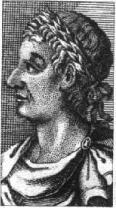
In his book “The Crisis of Our Age”, which appeared as a bestseller in the thirties of the last century, Sorokin, an American sociologist of Russian descent, states that, analogously to Ovid’s story, the spirituality of our civilisation is in its last phase of decline: a large part of the population lives only on the surface of things, in the sensory illusion that the physical body is the creator, the bearer and the goal of its existence in the world. For this reason man confuses his striving for power, money and fame with the meaning of life, and his sensory stimuli determine his actions. Yet the quickly passing pleasures cannot satisfy him in the long run and cannot give his life any deeper meaning. Thus he falls into an inner crisis which is actually meant to bring him to the insight: the goal of human evolution cannot be a transient life in a physical body, but an eternal life in a godlike body of light. Pain and illness function as an early warning system with which his inner physician endeavours to bring his derailments back into the divine order. The human discord and inner conflict between the “actual and target” state of his present stage of development are the birth pangs of an inner upheaval.
This existential discrepancy, which Sorokin already largely recognised, is joined today, some decades later, increasingly by yet further destructive factors of decline which intensify the pressure of upheaval: stress, environmental pollution, electrosmog, manipulated and unnatural food, addictive substances, unemployment, loneliness and the ever more difficult search for a truly meaningful and satisfying bond and occupation. This “ailing” of today’s civilisation, together with our hereditary burdens (miasms according to the founder of homeopathy, Hahnemann), is the actual source of many of our illnesses. Here too lie the roots of the unaffordable explosion in costs and of the failure of our health system.
Medical treatment and complementary medicine, which offers the patient help in supporting his own healing powers and strives to support his own healing powers, depends on the cooperation between physician and patient. Firstly, a willingness is demanded of the patient to give up his wrong attitude to life and his wrong habits of life, particularly his passive consumer behaviour. Health has to be earned and worked for. Secondly, he has to learn to recognise, to accept and to let go of his errors in thinking, feeling, wishing and willing. On the physician’s side, what is needed is an explanation of the methods of examination and healing available as well as the disclosure of their real limits. This is meant to offer the patient the possibility of searching for the roots of his complaints outside the consultation too, in order then, together with the physician, to reach a realistic therapeutic goal by the shortest route.
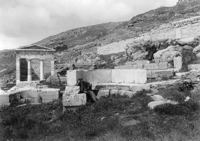
Our life consists of doing and letting go. Decisive for the first is the intellect, for the second the confidence of the heart: our guidance and our life is the love and wisdom of God. With this confidence an “inner turning back” begins and gradually makes us capable of our own inward contemplation. Its intensification leads finally to the experience of unity with the Creator (=enlightenment, rebirth of the soul). In this way man gains his own experience of the good news of the Gospel of Jesus and fulfils the old exhortation, written three thousand years ago on the temple of Apollo in Delphi (right): “Man, know thyself and you will know God within you”.
Creation and I
The primary task of medical research and action should help us to a dignified and optimal quality of life during our earthly sojourn. Despite all efforts, what ultimately remains unavoidable at the end of our worldly existence is the encounter with death. A phenomenon which, from the point of view of nature, is thoroughly meaningful and necessary for “creation”.
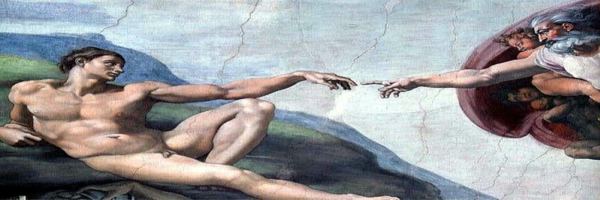
Creation stands in direct dependence on transience, for creation means making, change and new beginning. A new beginning without an end would be unthinkable! Thanks to this fact, creation will last eternally and life will move continually and develop anew. True life knows neither slumber nor sleep and is eternally a self-acting stream of expanding perfection. This perfect activity and joy of life arises of itself from the fundamental law of love. With death too we make friends, for it is a makeshift to free us from a garment that can no longer serve us for the completion of life. If the physical body becomes so incapable that the personality that inhabits it can no longer use it in the striving for completion, nature itself intervenes and dissolves the limitation.
Grief at the death of a beloved person is in reality indignation against the effect of this law, which was created in order to grant new and great possibilities of resting and waking. Nothing in the universe runs backwards, everything moves forwards towards ever greater perfection. “The human part” of our being should know that no one can ever leave our universe and that the one who has passed on can only be in a better place than the previous one.
If it is real, true, divine love that fills and binds us, then it will never cease and must sooner or later draw us again to the being that we love. Therefore true divine love knows no separation through death. That which makes us feel a separation is not love. The feeling of separation is merely one of the illusions of the personal self, in which it still persists because it does not understand the nature of consciousness.
If we think of a beloved person, we are, with our higher thought body (mental body), really with him in the same instant in which our consciousness dwells with the other person. If man could understand this truth, he would burst the chains that cause such mourning. Such grief arises only from the fact that the personality, particularly in its feelings, regards the body as the actual individual being, instead of recognising that the body is only a garment that the inner man wears. Everyone should master this garment completely and constantly and bring it to steady, joyful service. Whoever truly loves another being wishes it to be happy and at peace. If this being now chooses, through so-called death, a better opportunity for future expression, we should not wish to hold this being back in a state of imperfection.
Ignorance of this truth binds people in their self-made chains of limitation. This kind of ignorance binds the expression of life of the human race and creates a stubborn refusal to understand life correctly. Every year it draws millions of people into the depths of despair. This wrong attitude to life not only prevents the fulfilment of all that alone is worth living for, it also robs the being of its abilities and plunges it into the bonds of self-pity. If the individual being wants to win its victory and attain mastery, it must affirm its transience without ever wavering. Through their incorrect thinking and acting, people have created an evil obstacle on this earth: through the fear of death they prevent their high-striving, wonderful beings from winning freedom and using the full power of divinity which has belonged to them since the beginning of creation as the gift of the FATHER to his children.