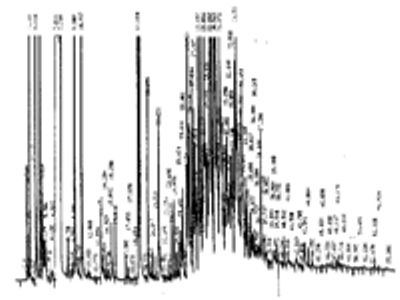
Low indoor exposure
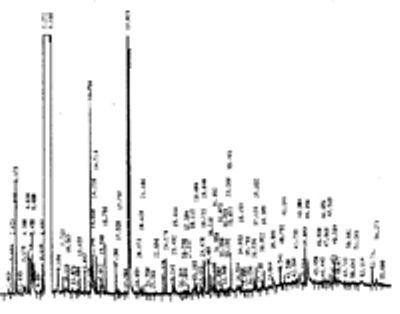
High indoor exposure
Effects of harmful substances on humans
Effects of harmful substances on humans from organic chemicals are known for a large number of substances, and in some cases even the lowest concentrations can lead to massive and not infrequently irreversible damage. An impressive example is the Seveso accident, in which polychlorinated dibenzodioxins (grouped under the collective term “dioxins”) were released. Subsequently, improved analytical methods made it possible to demonstrate a ubiquitous distribution of this class of substances in the environment.
According to the “Chemical Abstract Service”, about 8 million chemical compounds are known today, of which between 65,000 and 100,000 are manufactured commercially and are available on the market. A large number of these compounds do not occur in nature and were first synthesised by humans and introduced into our environment in the course of the last 100 years. There was therefore no possibility for humans to adapt to these substances in the course of an evolutionary development.
While dioxins can generally arise only unintentionally as by-products in chemical processes or in combustion processes, all the more consideration must be given to those classes of substances that have found wide use in pest control and in industrial processes. The so-called chlorinated hydrocarbons accompany our daily lives in the form of solvents, correction fluids, in dry cleaners, and are used in industry on a scale of tonnes for cleaning and degreasing processes. Another example is the polychlorinated biphenyls, which, because of their inert chemical and physical properties, have been used to a considerable extent as hydraulic fluid, plasticisers, flame retardants and for many other purposes. Because of their chemical stability, the polychlorinated biphenyls are degraded very slowly in nature and accumulate in the fatty tissue of animals and humans, so that their concentration increases along the food chain. However, the problem of such pollutant burdens was in part recognised only in the last 10 years.
Today the term “sick building syndrome” is familiar, which is due to the fact that pollutant burdens occur particularly frequently indoors, since numerous chemical compounds are used, e.g. in joint sealants, as adhesives for fitted carpets, as wood preservatives and for numerous other purposes. Under these conditions a complex set of symptoms can arise, with headache not infrequently being a first sign of exposure. In addition, impaired concentration up to states of confusion, nausea and vomiting, and allergic reactions of the skin and mucous membranes are known. In more recent studies, for example, a connection has been demonstrated between infertility in women and increased exposure to chlorinated hydrocarbons.
Below is a small selection of environmental toxins from the series of organic chemicals. The list could be continued endlessly.......
Pesticides
The collective term pesticides covers a large number of chemically very different substances that exert a damaging effect on organisms (animals, plants, microorganisms, viruses). Accordingly, a distinction is made between herbicides, bactericides, virucides, fungicides, insecticides, etc. Pesticide toxicology deals with the effect of pesticides on organisms other than the desired target organisms, especially on humans.
Pentachlorophenol
Pentachlorophenol (PCP) is a compound from the group of chlorophenols that is particularly frequently used industrially. It is used as a fungicide, disinfectant, wood preservative, leather protection agent and preservative, and by this route enters our environment widely. Its use as a wood preservative in particular has in some cases led to high levels of indoor exposure. It can outgas from pentachlorophenol-treated wood (e.g. ceiling and wall panelling) over long periods and lead to human exposure. While air concentrations outdoors lie in a range between 0.09 and 8 ng/m3, concentrations of up to 100 ug/m3 can in some cases be measured indoors. Worldwide production is likely to be approx. 90,000 tonnes/year. Pentachlorophenol can be contaminated by various accompanying substances arising during manufacture, e.g. with chlorinated phenoxyphenols and dihydroxybiphenyls as well as with dibenzofurans and dibenzodioxins. In 1989 a ban on the use of pentachlorophenol was adopted in the Federal Republic of Germany.
Pentachlorophenol is rapidly absorbed via the lungs, skin and gastrointestinal tract. Absorption on oral intake is likely to be 100%, on inhalation approx. 80%. Of the amount taken up, approx. 80% is excreted unchanged and approx. 20% is metabolised in the liver. The biological half-life is 18 - 20 days; because of its high lipophilicity the substance is stored in fatty tissue. Further accumulations are found in the liver and kidney.
Pentachlorophenol has a high acute and chronic toxicity. The acute toxicity is based essentially on an uncoupling of oxidative phosphorylation, so that the formation of ATP and cellular energy metabolism are impaired. As a consequence there is greatly increased metabolic activity with an increase in respiration rate and hyperthermia. With high exposure, death from heart failure can occur. Such deaths have been described within 4 hours of oral intake of 11g pentachlorophenol and also within a few hours with an absorbed amount of approx. 2 g of the chemical in adults. The chronic toxic effects of pentachlorophenol exposure can be manifold and comprise a highly varied set of symptoms. Systemic toxic effects manifest themselves in an increased susceptibility to infection, e.g. in the form of intestinal mycoses and recurrent bronchitis, cardiac arrhythmias in the form of bradycardia or tachycardia can occur. A general reduction in performance is frequently recognisable. Among the dermatological changes are acne (chloracne), boils, hair loss and eczema. The neurological symptoms are characterised by headaches, altered nerve conduction velocity, dizziness, pressure in the ears and disturbances of balance. In the endocrine system there are cycle disorders and increased infertility. The frequency of miscarriage rises drastically with increasing pentachlorophenol concentrations in the blood. The ophthalmological symptoms can include disturbed tear production. The immune system has proved to be a sensitive indicator of pentachlorophenol exposure.
Polychlorinated biphenyls
The polychlorinated biphenyls (PCB) are a group of 209 different compounds and are oils or waxy solids. Mixtures of chlorinated biphenyls came onto the market in the Federal Republic of Germany under the brand names Clophen, Phenoclor and Aroclor. These technical mixtures can contain up to 100 different polychlorinated biphenyls. They are non-flammable, chemically stable, have good dielectric properties, are non-corrosive, sparingly soluble in water and, not least, cheap to produce. Because of these properties, which are interesting from the point of view of application, they were used as early as 1929 in the electrical industry in capacitors and high-voltage transformers. Further areas of application are plasticisers for plastics, flame retardants and jointing materials. The use of PCB-containing joint materials can thus, as a result of outgassing, contribute quite substantially to indoor exposure to polychlorinated biphenyls. PCB-containing capacitors are also extremely widespread, e.g. in tumble dryers, extractor hoods, ironing machines and in fluorescent lamps. In the Federal Republic of Germany manufacture has been banned since 1983, and since 1972 PCBs may only be used in closed systems, e.g. transformers. This closed application, too, has since 1989 been possible only with a transitional period of 4 to 10 years. The polychlorinated biphenyls are, however, extremely stable and continue to be introduced into our environment, e.g. through transformers and capacitors of older appliances and via PCB-containing joint sealants. On combustion in a temperature range of 600-900°C the highly toxic chlorodibenzofurans and chlorodibenzo-p-dioxins can form.
Because of their chemical properties the polychlorinated biphenyls are fat-soluble, i.e. they accumulate in the fatty tissue of animals and humans. Humans, as the last link in the food chain, are particularly burdened. The biological half-life is over 90 days. The hydroxy derivatives arising during metabolism can, however, in some cases show considerably higher acute toxicities than the parent compounds. Acute mass poisonings from PCB-poisoned oil were observed in Japan in 1968. Nevertheless, the polychlorinated biphenyls are likely to have a comparatively low acute but a very high chronic toxicity. Thus liver tumours could be produced in animal experiments by PCB exposure. In humans there is a suspicion of a tumour-promoting effect or of an effect as co-carcinogens. Further toxic effects include dermatological disorders (acne, hair loss), hormonal and fertility disorders, a rise in cholesterol and neutral fats.
Chlorinated hydrocarbons
The term chlorinated hydrocarbons (chlorohydrocarbons, CKW) covers those halogenated hydrocarbons that contain chlorine. The chlorinated hydrocarbons have found extraordinarily wide use as solvents, degreasing agents and cleaning agents and as a starting point for chemical syntheses, and are among the most important groups of substances of ecotoxicological significance.
Dichloromethane
Dichloromethane is used as a solvent and aerosol propellant and can be contained in numerous paints and varnishes. Worldwide production is approx. 600,000 t/year, of which 160,000 t/year in the Federal Republic of Germany alone. In Germany, air samples contain approx. 2-40 ug dichloromethane/m3. The substance has a high density and shows good penetrating power, e.g. also into concrete floors, whereby the groundwater can be endangered.
The substance is absorbed very effectively from the intestinal tract and via the lungs. It is known to cross the blood-brain barrier and the placental barrier. Dichloromethane exerts toxic effects on the central nervous system, which can result in symptoms with headache and coordination disorders. Gastrointestinal symptoms are also known. Carcinogenic effects on inhalation are under discussion.
Chloroform
Chloroform (trichloromethane) was used as a solvent, in aerosol sprays, as a coolant and as a chemical intermediate for numerous syntheses. Production is approx. 250,000 t/year worldwide, of which approx. 40,000 t/year is accounted for by the Federal Republic of Germany. It was formerly often used in anaesthesia but is now regarded as obsolete. As a solvent and for local anaesthesia it was also used in medicines, but its use has been largely restricted because of its carcinogenic effect in laboratory animals.
Intake is likely to occur primarily via drinking water, secondarily via the air and lastly via food. After a single intake, approx. 50 % is excreted again unchanged via the exhaled air. Chloroform initially causes disorders of the central nervous system in the sense of general symptoms such as headache and confusion. Gastrointestinal disorders are also known. With more prolonged exposure there are hepatotoxic effects, which can lead to extensive damage to liver function. An oral intake of 10 ml chloroform can lead to death. Carcinogenic effects are known from animal experiments.
Trichloroethylene
Trichloroethylene does not occur naturally in our biosphere. Worldwide annual production is 600,000 t, of which approx. 30,000 t is accounted for by the Federal Republic of Germany. The greater part of the amount produced finds its way back into our environment via exhaust air and via waste. Its industrial use as a cleaning agent and solvent is particularly significant; at the same time trichloroethylene serves as an intermediate for chemical syntheses.
Trichloroethylene undergoes intensive metabolism, in which a whole series of highly toxic metabolites can arise. After inhalation, approx. 50 % - 65 % is primarily absorbed, of which approx. half is excreted renally within 3 weeks. Because of its high lipophilicity, trichloroethylene accumulates in fatty tissue. With longer-term exposure, liver and kidney damage is known. At the same time there are changes in the central nervous system, which can manifest themselves as headache, tiredness and confusion. There is an intolerance to alcohol.
Tetrachloroethylene
Tetrachloroethylene is used as a solvent in textile dry cleaning, but also as an extraction and cleaning agent and as an intermediate for the chemical synthesis of fluorocarbons. Worldwide production is 1.1 megatonnes/year, of which approx. 150,000 t/year is accounted for by the Federal Republic of Germany. The substance is highly volatile, and corresponding contamination has been detected in food shops in the vicinity of dry cleaners, particularly when the foodstuffs were offered unpackaged.
After inhalation, tetrachloroethylene is (predominantly exhaled again unchanged, but in part also stored in fatty tissue. Liver parenchymal damage can appear as a toxic effect. A carcinogenic potential is suspected.
Dichlorobenzene
3 isomers of dichlorobenzene are known, which are used as solvents, as pesticides and wood preservatives and as an important intermediate for further syntheses. Dichlorobenzene is also used as a moth poison and as an “odour killer” in deodorants. Dichlorobenzenes have a narcotic effect and can exert toxic effects on the central nervous system. Skin contact leads to skin irritation; with chronic exposure, irritation of the mucous membranes is also known. Carcinogenic effects have not been observed so far.
Aromatic hydrocarbons
The aromatic hydrocarbons are benzene and various substituted benzene derivatives. This class of substances is used both as an intermediate stage for countless chemical syntheses and as solvents. Uptake by humans occurs predominantly by inhalation, less through skin contact or food intake. Benzene and its derivatives can exert various toxic effects in the organism, which concerns above all the central nervous system and haematological changes. Hepatotoxic effects are also known.
Benzene
Benzene is a flammable liquid with the formula C6H6 and occurs in crude oil at a concentration of approx. 4 g/l. Benzene is used as an intermediate for numerous syntheses (polystyrene) and as a solvent and cleaning agent. Petrol contains approx. 2 % - 8 % benzene. Emissions in Germany amount to approx. 55,000 - 70,000 t per year.
The airways are the primary route of uptake for benzene. The toxic effects correspond to those of other aromatic solvents and primarily affect the central nervous system. Benzene intoxication manifests itself first in the central nervous system with dizziness, headache and nausea. Further harmful effects concern the blood system. Benzene is suspected of being able to trigger leukaemias and of having carcinogenic effects in general.
Toluene
Toluene occurs in petroleum and can be released naturally by forest fires. By far the greatest part, however, is introduced into our environment by humans; worldwide production is approx. 30 megatonnes per year. It is used as a starting material for various syntheses, as an additive to aviation fuel and as a solvent for rubber and fat, as well as a thinner for paints and varnishes. Uptake can occur via the airways and via the skin. Toluene is fat-soluble and accumulates in body fat. The toxic effects predominantly affect the central nervous system; at the same time liver and kidney damage can occur. Through inhaling the vapours of toluene-thinned paints and varnishes, intoxications among young people have already occurred with great frequency.
Detection
Detection is by blood analyses in a laboratory specially equipped for this purpose or by indoor air analyses.
Treatment
Avoidance of exposure! Detoxification through fasting, drinking cures, sweating cures, colon hydrotherapy, antioxidants, breathing therapy, among others.
Chemical air pollution
Air pollution
In recent decades the problem of air pollution has increasingly entered public awareness. In view of the dangers of acid rain, smog and forest dieback, indoor air contamination was often overlooked. Yet it is precisely in this area (homes, workplace, schools or public facilities) that we spend up to 90 % of our lifetime. The air quality of indoor spaces is therefore a decisive factor for our well-being as well as for our health.
Burdens caused by saving energy
In the course of the sensible efforts to reduce the energy losses of buildings, insulation measures not only drastically reduced the air exchange rate; the use of unsuitable building materials (chipboard, foams, adhesives, varnishes...) also placed an additional burden on indoor air.
Symptoms of illness
Indoor pollution is increasingly being linked to illnesses. The symptoms of illness caused by indoor air contamination are mostly of a non-specific kind. In many cases these are: irritation of the eyes, skin (rashes) and mucous membranes with dryness, irritation of the airways, hoarseness, headaches, tiredness and poor concentration, dizziness and nausea. The complaints increase during the stay in the rooms concerned and decrease again after leaving the building (holidays!).
Long-term effect
Human beings are exposed to the most varied environmental influences, which fill up the “human barrel” more and more. Each of us thus comes into contact with chemicals day after day. In addition, the pollutant load indoors is usually considerably higher than outdoors. In time, which may take longer or less long, our barrel is full: an allergy suddenly appears “inexplicably”. Indoor toxins not only lead to the acute complaints described above but also play a part in filling the barrel. Allergies are thus a frequent reaction of the body to indoor toxins. Children in particular are at greater risk than adults. Their barrel is, after all, smaller.
Sources
Exposure to volatile organic compounds today comes above all from building materials and furnishings. But cosmetics and felt-tip pens also give off organic gases. Some examples follow: solvents, adhesives, paints, cleaning agents, paint removers, polishes, varnishes, tobacco smoke.
Checking the situation indoors
To gain clarity about the situation within your own four walls or at the workplace, there are various methods for checking the situation: active sampling method, passive sampling method with pollutant monitor.
In the active sampling method, the air is drawn by means of a pump through a small tube that is filled, for example, with activated carbon. Here the volatile organic substances are “held fast” and then analysed in the laboratory. In the passive sampling method no pumps are needed. The pollutant monitor collects the substances “automatically”, so to speak. As the monitors are very easy to handle, you can carry out the measurement yourself. The sample is then likewise analysed in the laboratory and the result interpreted.
Instructions for using the 3M monitors for organic gases and vapours
Leave the monitor hanging in the room concerned for approx. 9-14 days (16 hours for formaldehyde) (see the section on sampling). During sampling, the doors and windows should remain closed as far as possible (no airing!) and there should also be no smoking in the room concerned. For calculating the concentration it is important that the exact sampling time is known. The time of the start of sampling and of its end must therefore be noted exactly.
- Place the monitor in the room in which you suspect the greatest air pollution. Hang the monitor up in the room using the cord supplied. Make sure that the distance between the monitor and the wall, furniture, curtains etc. is at least 60cm. Nor may the monitor be placed directly above a heater or a sink.
- The monitor and the transparent closure cap (needed only at the end of the measurement) are packed in the aluminium can.
- Remove the white plastic lid and open the aluminium can by pulling on the metal ring (Important! Carry out this step only when you actually want to begin the measurement.).
- Take the monitor out of the aluminium can.
- Note the monitor number on your sampling record.
- Note the date and time on your sampling record (start of sampling).
- Place the monitor in the relevant room, as described above.
- After sampling (approx. 9-14 days) you must remove the plastic ring with the white film.
- Immediately fit the transparent closure cap firmly (it must audibly click into place.). Make sure that both plugs in the closure cap are firmly closed. These ensure a gas-tight fit.
- Note the date and time on your sampling record (end of sampling).
- Put the monitor back into the aluminium can and close it with the white plastic lid.
- Once sampling has been completed, the passive samplers (fitted with the plastic cap and well sealed!) should be sent for analysis together with the sampling record immediately if possible (express delivery is not necessary!), but at the latest after 5 days (interim storage in the refrigerator).