- How adaptable is your heart to internal and external stimuli?
- Is your heart constantly on high alert?
- Can your heart recover?
- What is the ratio between tension and relaxation?
Measuring heart rate variability (HRV) is the first step towards a new balance. It records the heart rhythm lying down and standing. From this, the activity of the autonomic nervous system (sympathetic and parasympathetic) and the health of the heart and circulation are derived.
How do I know when I am stressed?
Sometimes you notice quite clearly that you are on high alert, for example when your pulse is raised. But people do not always perceive a stressful situation as such. Anyone who wants to take a close look at their stress profile in everyday life should have an HRV measurement carried out.
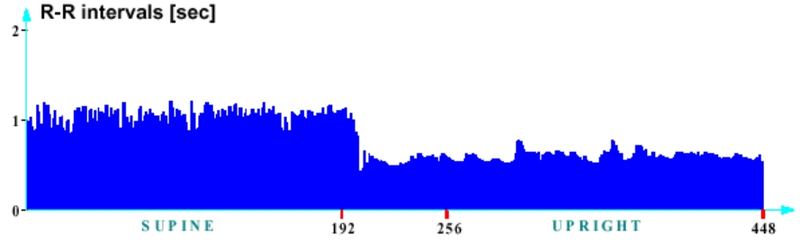
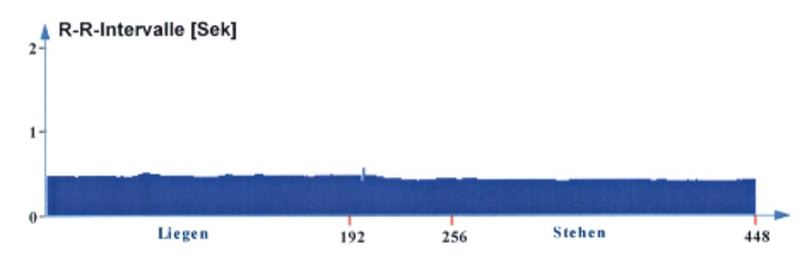
Heart rate variability indicates the time intervals at which our heart beats and is therefore a measure of the heart's capacity for regulation. The more the heartbeat varies, the better the heart adapts to the environment and to internal stimuli (thoughts, feelings, illnesses). The reverse also applies: the more regularly the heart beats, the more stress the body is experiencing.
Heart rate variability also says something about general well-being. A high adaptability of the heart to external and internal influences is equivalent to a good state of health.
The autonomic nervous system
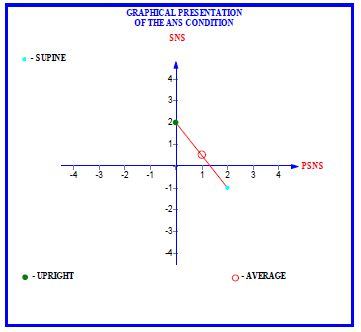
The HRV measurement gives an insight into the autonomic nervous system (ANS), which controls our entire body. Fortunately we do not have to think about every heartbeat, otherwise we would be dead! Our digestion, too, is controlled by the autonomic nervous system without our having to concentrate on it. The ANS has two functional parts.
The parasympathetic nervous system
The parasympathetic nervous system (PNS) is active at rest. It regulates digestion, activates the detoxification function of the kidneys and the liver and the immune system, is involved in feeling and in the expression of emotions, regulates swallowing, the salivary glands and the voice and, in general, all functions that have to do with regeneration and healing. The PNS is also involved in the blood supply to three areas of the body: brain, teeth and pelvis.
The sympathetic nervous system
The sympathetic nervous system (SNS) is active when we engage with our environment. As soon as we stand up, it takes the lead. It regulates the width of most blood vessels (thereby preventing hypothermia and determining where in the body how much blood is available at any given time), the sweat glands, the muscle spindles of the striated muscles (and thus muscle tension) and much more.
Both systems pump more than 70 different neuropeptides with a wide variety of tasks into the periphery and back into the central nervous system.
How HRV is measured
The Schellong test, in which blood pressure and pulse are measured lying down and standing, has long been known. The HRV measurement is modelled on this proven procedure and likewise measures the autonomic nervous system lying down and standing. This produces a picture of the parasympathetic and sympathetic systems.
The measurement requires a special device that transmits the electrical signals of the heart via a chest strap. The measurement is therefore completely harmless, like an ECG. It should be carried out on a normal day that reflects your everyday life well, and not when you are exceptionally stressed or acutely ill.
In a healthy person, the PNS is active when lying down and withdraws when standing; the SNS is active when standing and withdraws when lying down. Lying down, HRV measures the activity of the “Intrinsic Cardiac Nervous System”, a complex network of nerves at the heart that consists mainly of sympathetic and parasympathetic nerve cells. On standing up, the entire blood vessel system has to react and constrict the vessels slightly so that the blood does not sink into the legs. Standing up therefore tests not only the heart but also the sympathetic (and in part the parasympathetic) nerve supply to the smooth muscles of all blood vessels. In this way the test covers a large part of the nerve cells of the ANS and, by proxy, allows statements about its overall condition.
Two examples
What do I do with the result?
If the autonomic nervous system is weakened, the doctor can, together with further examinations, recommend individual treatments on this basis. With micronutrients tailored to your personal requirements, the ratio between phases of tension and recovery, and thus heart rate variability, can be favourably influenced.
Because the measurement is simple and inexpensive, it is excellently suited to documenting the success of therapy.