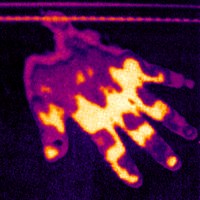
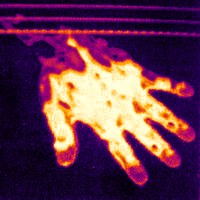
“HOT” is a photobiological process in which the patient’s blood is irradiated with ultraviolet light.
As early as 1896, Dr. Quinke experimented with the irradiation of isolated cells and was able to observe an increase in cellular respiration. It was only thanks to the Swiss physician Dr. med. F. Wehrli that HOT could be introduced into practice. Before the antibiotic era, this therapy was used with good success above all in the treatment of bacterial and viral infections, and later it was even able to have a favourable effect after the first courses of antibiotics had failed. Today the main indication is seen in all disorders of microcirculation.
With the patient lying down, 50 to 100 ml of venous blood is drawn and rendered incoagulable. While the cannula used to draw the blood remains in place for the later reinfusion, the blood is foamed with pure oxygen and passed by a UV light source.
The treated blood, which has meanwhile become lighter in colour thanks to the oxygen, collects in a second container, which is used for the retransfusion. After HOT it is advisable to lie down at home for another one to two hours.
All components of the treatment are single-use disposable items, so that transmission of pathogens is ruled out.
So what happens to the blood?
- The oxygen is converted into high-energy “singlet oxygen”. This activates biological processes in the body.
- Blood proteins are split without denaturation and converted into strong dipole molecules
- Immune cells are activated
- Bacteria and viruses are destroyed.
On 1)
The activated oxygen sets in motion a veritable cascade of chemical processes which ultimately produce, among other things, so-called “cholesterol peroxides”. These are energy carriers that are able to stimulate further biological processes and regulatory mechanisms in the body. The most essential effect is a marked improvement in circulation and in oxygen uptake in the tissue, which restores normal “living conditions” for the cells. The ground substance surrounding the cell clusters becomes more alkaline, and the waste products are carried away.
On 2)
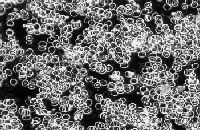
The splitting of approx. 10¹⁸ protein molecules creates small dipoles, similar to magnets with a north and a south pole. These are able to attach themselves to diseased cells and to stabilise their membranes again. The overexcited cells can thus “calm down” and recover. This still hypothetical view is important in connection with the treatment of chronic inflammatory processes and cancers. In addition, red blood cells that have become “sticky” as a result of a lack of oxygen and hyperacidity are polarised again by the dipoles; they subsequently repel one another again, the so-called rouleaux in the capillaries break up, and the red blood cells shrink back to their normal size. This improves blood flow through the capillaries (total number in humans approx. 40 billion, with an exchange surface of 1000 square metres!) several times over, and with it the supply of oxygen to the tissue.
On 3)
It has been demonstrated that the “eating activity” of the white blood cells is activated. In addition, the B and T lymphocytes multiply and show enhanced function.
On 4)
The reason why infections heal more quickly after HOT has not yet been clarified in detail. One hypothesis assumes that the breakdown products of the pathogens that are produced by the UV radiation constitute new “vaccines”, like immunising agents, which stimulate the immune system against the germ several times over.
In summary, HOT regenerates the ground substance, the actual living environment of the cells. Our health ultimately depends on this milieu.
Main indications
- Arterial circulatory disorders
- Smoker’s leg
- High blood pressure
- Angina pectoris
- Circulatory disorder in the eye
- Cerebral blood flow
- Diabetes
Contraindications
- Overactive thyroid
- Acute bleeding
- Specific blood diseases
- Febrile infections for which antibiotics would rather have to be used.
The effect of the therapy is reduced by vitamins E, A & C, cortisone and medicines containing aspirin.
Summary of the most important processes in connection with HOT
Capillary force: the engine of microcirculation
The heart is responsible for moving the blood from the venous to the arterial system. The actual microcirculation, the flow through the finest blood vessels, the capillaries, takes place through capillary force.
And it is precisely this microcirculation that matters. In the capillaries the blood releases oxygen and nutrients to the tissue and takes up waste products. Whether a tissue is healthy or diseased is decided here. That is why we see the main indication for HOT in disorders of the microcirculation.
Source: B. Furst, “The Heart and Circulation: An Integrative Model”, Springer, 2014
Effect of HOT
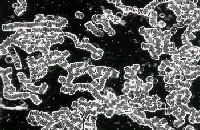
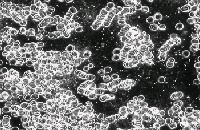
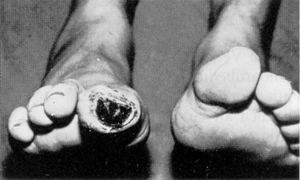
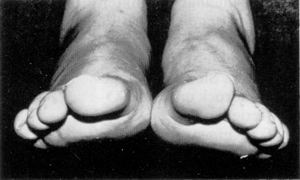
Circulatory disorder in the foot
Circulatory disorder in the eye


Circulatory disorder in the hands