Anyone who believes that the university medicine most familiar to us is the only (effective) medicine is gravely mistaken. There are different ways of looking at things.
If you are interested in a new car, you may look at its colour and shape, at the materials used or at whether the latest LED headlights have been fitted. On the other hand, you will also want to get to know how it handles, and you may well ask for a test drive. These are already two completely different ways of looking at the same object, the “car”. The first criteria correspond to the usual university point of view, which corresponds to “causal-analytical conventional medicine”, the feel of the drive to “functional and inductive-synthetic medicine”. And only with both together will you decide for or against the car. It is interesting how often, in medicine, we decide on the basis of the “colour” alone. That this offers little prospect of patients who remain satisfied in the long term is therefore understandable.
The future of medicine is without doubt a combination of the different points of view, with the best of all the different worlds.
Thus medicine (as a whole) knows the most varied kinds of assessments and treatments. These can be divided into categories according to the theories on which they are based.
| SPIRITUAL MEDICINE | Intuition, healing Life counselling, care Psychology |
|---|---|
| ENERGETIC MEDICINE | Electroacupuncture, Kirlian Kinesiology Homeopathy |
| INDUCTIVE-SYNTHETIC MEDICINE | Hearing, seeing, feeling, touching Smelling, tasting Traditional Chinese Medicine |
| FUNCTIONAL MEDICINE | Stress tests Nutrition, micronutrients, acid-base balance Oxidative stress, biochemistry |
| CAUSAL-ANALYTICAL CONVENTIONAL MEDICINE | Histology, surgery Imaging procedures, X-ray Standard blood tests, cholesterol, blood sugar, blood pressure |
One of the main criteria for the classification is the question of objectivity and subjectivity. The more the therapist as a factor is involved, with his personal perception and his abilities, the further up we slide in the categories listed. The conventional medical concept strives to represent, as far as possible, only the lower area.
For the sake of understanding, we distinguish between “conventional medicine” and “extended medicine”.
| SPIRITUAL MEDICINE | Extended medicine | |
|---|---|---|
| ENERGETIC MEDICINE | ||
| INDUCTIVE-SYNTHETIC MEDICINE | ||
| FUNCTIONAL MEDICINE | ||
| CAUSAL-ANALYTICAL CONVENTIONAL MEDICINE | Conventional medicine |
It is above all naturopathic practitioners (= “naturopaths”) who make use of various methods from the field of extended medicine.
| SPIRITUAL MEDICINE | Non-physician medicine | |
|---|---|---|
| ENERGETIC MEDICINE | ||
| INDUCTIVE-SYNTHETIC MEDICINE | ||
| FUNCTIONAL MEDICINE | ||
| CAUSAL-ANALYTICAL CONVENTIONAL MEDICINE |
One institution that is trying to introduce quality control for these procedures among non-physician therapists is the EMR
Extended medicine practised by physicians rests on a solid training in conventional medicine. In his responsibility, the physician always strives to meet the criteria of effectiveness, scientific rigour and appropriateness.
| SPIRITUAL MEDICINE | Physician medicine | |
|---|---|---|
| ENERGETIC MEDICINE | ||
| INDUCTIVE-SYNTHETIC MEDICINE | ||
| FUNCTIONAL MEDICINE | ||
| CAUSAL-ANALYTICAL CONVENTIONAL MEDICINE |
Of course, hardly any physician will ever be able to cover the entire spectrum. Here too, as in university medicine, there are specialisations.
In acute medicine we are often grateful to be able to draw on effective conventional medicines. They relieve the symptoms quickly. Unfortunately, however, this relief is as a rule not to be equated with a cure. Above all in chronic illnesses we depend on developing a multifactorial strategy (bold type in the diagram).
Different therapeutic approaches.
| Conventional medicine | Extended medicine | |
|---|---|---|
| Aim | No symptoms | Cure |
| General | Treats “findings” | Treats the patient as a whole |
| Allergies | Antihistamines | Search for focal infections, teeth, paranasal sinuses, food |
| Autism | Psychotropic drug Ritalin | Micronutrients, detoxification, nutrition |
| Diarrhoea | Antidiarrhoeals | Colon hydrotherapy, symbiosis control |
| Fever | Antipyretics | Hot baths, alkaline bath, compresses |
| Gallbladder complaints | Antispasmodics | Liver-sparing diet, digestive aids |
| Infections | Antibiotics | Vitamin C, Echinacin, ozone therapy |
| Migraine | Analgesics | Heavy-metal elimination, allergy assessment, micronutrients - iron |
| Heartburn | Gastric acid inhibitors | Stomach-sparing diet, general deacidification, gastric acid preparations |
One of the most important differences from our therapy is that conventional medicine does not look for the causes but relies almost exclusively on combating the symptoms.
| Acute medicines of conventional medicine | Medicines of extended medicine |
|---|---|
| Symptom-oriented | Treatment of the disorder |
| Foreign substances | Naturally occurring substances |
| Often a rapid effect | Often slow-acting, restoring balance |
| Dependence possible | No dependence |
| Side effects | Mostly free of side effects |
| Is generally paid for by the insurers. | Is often not paid for by the health insurers. |
Advertising slogan for fever-reducing medicines from a major pharmaceutical manufacturer
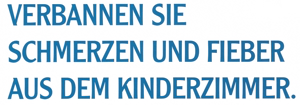

Fundamentally, fever is our best instrument of healing! Here the different ways of thinking of conventional and extended medicine show very clearly.
In extended medicine it is also said
- Small stimuli promote life processes.
- Medium stimuli inhibit them.
- Large stimuli destroy them.
Small stimulus impulses unfold their healing effect above all when they enter into so-called cyclical processes. Since our body consists of rhythms, that is, of constantly recurring metabolic processes (just think of the circulation), small changes will, in line with findings from chaos research (butterfly effect), unfold great effects in the organism. Through the rhythmic repetitions they multiply and exponentiate any number of times. From the small cause there thus follows the great effect. Thanks to this fact, gentle treatment methods too can very well help excellently.
Treatment systems of extended medicine
In principle the patient has two ways of obtaining treatment. On the one hand he can consult a physician; on the other, going directly to a therapist is enjoying increasing popularity. These options are subject to different criteria.
| Physician | Therapist |
|---|---|
| May make a diagnosis | May not make a diagnosis |
| Usually has various procedures to choose from | Has his specialist field |
| The indication for treatment is determined by the physician | The indication for treatment is usually determined by the patient (who consults the therapist) |
| Treatment usually more costly | Treatment usually cheaper |
| Physician refers to the therapist for a targeted treatment | Therapist refers to the physician when the therapy fails to produce a response |
| Likelihood of an appropriate treatment higher | Likelihood of an appropriate treatment lower |
| Does not need EMR recognition | Needs EMR recognition |
| Extended medicine treatments are paid for less often by the insurers | Extended medicine treatments are paid for more often by the insurers |
MEDICINE OF CAUSES
As described above, one of the most important aspects pursued by the Seegarten Klinik is the identification of causes and their treatment. The dominance of the pure combating of symptoms and of anti-therapies is one of the most significant factors driving up healthcare costs. The only ones who profit from this are the pharmaceutical industry. It is delighted with everyone who is condemned to a lifelong consumption of medicines.
BUT
So-called complementary medicine is not immune to this flawed concept either. Taking herbal painkillers, for example, pursues the same goal as taking chemical painkillers: pure combating of symptoms. For this reason both schools of medicine must accept this new challenge of no longer attending to the complaints alone, but to all possible causes and triggers.
It should be borne in mind:
To treat an inflammatory rheumatoid arthritis, for example, with the classic immunosuppressive medicines is as if you suffered a burst pipe at home and called in the plumber. Instead of repairing the pipe, he merely turns off the water. What standard medicine thus expects patients to put up with in such situations would not be tolerated in any other trade.
Comment by Dr. med. J. van Limburg Stirum on the vote: “Yes to complementary medicine”
On 17 May 2009 the Swiss people approved, in a national vote, a constitutional article (basic law) for complementary medicine. 67 per cent of those voting came out in favour of the new constitutional article. Switzerland is the first country in Europe to mandate the state and its constituent states (cantons) in the constitution to take complementary medicine into account in the healthcare system.
This avalanche-like result sends a signal. No, by that I do not mean the wish for complementary medicine. By that I do not mean the incomprehension towards the reprehensible statements of the immunologist from Bern, Prof. Dr. Beda Stadler. I even like him, for he speaks straight from the heart of many conventional physicians. From him the practitioners of complementary medicine could still learn a great deal, namely where competent and scientific work of persuasion towards conventional medicine is lacking.
What is decisive is how this unambiguous result just as unambiguously demonstrates the deep-rooted dissatisfaction of the voters with today’s conventional medicine. For if we were happy with its methods and customs, the vote would never have come about in the first place. Evidently the many medical advances of recent times are not enough to compensate for this (human?) deficit.
This vote, together with its campaign, has thus shown both conventional medicine and complementary medicine bluntly where decisive homework still remains to be done.