Introduction to nutritional medicine
“Your food is your strongest medicine”
“The body lives for 24 hours on what we supply it with, and then nutrition is supposed to play no part in health or illness?”, Dr. H. Nieper once asked at a medical lecture. Indeed, nutrition is of elementary importance not only for our well-being. It is the basis of our culture (cultura = agriculture) and connects the individual, society and the environment.
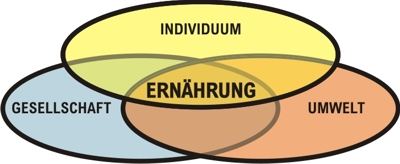
The seed of all culture thus evidently lies in the relationship to the earth. Understandably, countless nutritional doctrines became established, which try permanently and ever anew to adapt nutrition as well as possible to people’s current needs. Over the last 60 years, however, the supposed understanding of food has been increasingly and severely clouded by blind trust in modern science and by the appeal of increasingly artificially embellished products. Much of what we consume has been degraded to plain “calorie stuffs”. No longer fresh and healthy, but flavoursome, long-lasting, cheap and above all fast are the modern mottos. It is precisely when eating that one can still save the last few minutes of time that today’s pressure to perform steals from us. Eating as a waste of time? Fast-food chains are shooting up like mushrooms.

Fast food is increasingly popular, especially among young people

Even the Swiss “food postage stamp”, where one evidently was still supposed to “lend a hand” with the cooking, did not make it to more than 15Rp...

Certain fast-food meals can hardly be told apart from medicines any more… The “side effects” are pre-programmed.
Together with our sedentary way of life, it is less and less surprising that “diseases of civilisation” are increasingly occurring and that healthcare costs are rising exponentially. Instead of sound treatment concepts that remedy the cause, chemical agents are used out of convenience, ultimately merely to combat the symptoms. In doing so, people persist in the mistaken belief that freedom from symptoms is the same as a cure. Exactly the opposite is the case. One remains permanently ill, a pharmacological dependence grows, and the side effects of the medication in turn call for new medicines. A vicious circle?
Which illnesses come into question here? It is now generally known and scientifically proven that the following conditions are diet-related or can be favourably influenced by dietary measures or, if attended to in good time, prevented:
- Allergies, neurodermatitis
- Hardening of the arteries
- Asthma
- Disorders of the pancreas
- Anaemia
- Inflammations (-itis)
- Cardiovascular disorders
- Tooth decay
- Goitre (thyroid)
- Liver and gallbladder diseases incl. gallstones
- Disorders of fat metabolism
- Urinary stones
- Heart attack and other heart diseases
- Infectious diseases
- Gastrointestinal diseases
- Migraine, headaches
- Osteoporosis
- Psychological disorders such as anorexia, autism or bulimia
- Rheumatism
- Stroke and diseases of the blood vessels of the brain
- Overweight and underweight
- Diabetes (diabetes mellitus) and other metabolic disorders
That good food nevertheless leads a shadowy existence in our lives is due, among other things, to the fact that we know foodstuffs only by the most elementary criteria, as a “thing” consisting of fats, carbohydrates, proteins, vitamins and minerals together with any number of unpopular calories. Moreover, for most people in the civilised world, food is available everywhere and easily. Never in the history of humankind has so much food been so much taken for granted. Even less time is spent on buying food than on a new pair of jeans in the clothes shop. Yet our food deserves the highest respect! Taking in food is far more intimate than any sexual activity, for which we certainly do make certain demands as well. For taking in food means not only union but becoming alike (assimilation): transformation into oneself! That is what we are made of. Food thus embodies a far greater significance than we usually assume. Foods also unfold effects in the organism that cannot be put into words: “If you want to know the taste of a pear, you must eat the pear yourself”, says a Chinese proverb. Foods possess a wealth of characteristics that one does not readily notice. Besides taste, they embody a characteristic colour, shape, consistency and smell. The first contact usually takes place on the visual level, which the food industry knowingly turns to its advantage.
The “other” abduction of our children.
After all, one has to get used to the chemical food industry in good time...
As soon as we see a food and smell it or even bite into it, certain emotions arise in us, which can turn out very individually; quite gradually the food unfolds its living effect on the organism. Suddenly, especially after spicy dishes, one feels a warmth and gets red ears, and at the same time an existing skin rash gets worse. After alcohol the senses begin to cloud, and on the other hand they become clearer after a coffee. Especially after excessive consumption of sweets or animal fats, the stomach suddenly feels heavy. After consuming milk the nose becomes blocked, one gets tired, mucus forms in the lungs or even a discharge in women. Flatulence develops. After certain foods a migraine develops. Bitter and salty foods dry out the mouth on the one hand and, on the other, at the same time dampen an asthma attack. An acute allergic reaction can develop after a kiwi fruit. In many cases the mere smell of a food can provide information about its effect in the body, without it having to be ingested at all. And often it is enough to imagine the corresponding scent in order to identify, after a 5-course meal, the food that has not agreed with one (One can also “not be able to stand the smell of” someone.).
Besides these colourful effects, food controls our glands. Eating is therefore also hormone therapy! Carbohydrates determine how much insulin (storage hormone) is released, and protein does so for its counterpart glucagon (mobilisation hormone). Fats and oils likewise play an extraordinarily important role, because they influence the so-called eicosanoids (Nobel Prize 1982), which are something like “super hormones” that conduct this whole metabolic orchestra. Thus fats with a high proportion of omega-3 fatty acids (such as oily sea fish, linseed oil, walnuts) or of monounsaturated fatty acids (such as olive oil, macadamia nuts, almonds, avocado) can, with the help of glucagon, inhibit inflammation and tumour cell growth, lower blood pressure, stimulate the immune system and also improve the flow properties of the blood. Other fats such as the omega-6 fatty acids or the neutral fats (fatty red meat, egg yolk), together with an overdose of insulin (too many carbohydrates!), have the opposite effect: inflammation and tumour cell growth are promoted, blood pressure rises, the immune system is inhibited and the flow properties of the blood are worsened. This does not mean, however, that these fats have to be given up. As with everything in life, a balance is needed.
Given this wealth of effects that foods unfold, it is not surprising that an equally varied range of ways of eating is to be found. The risk in this is always that many originators praise their dietary pattern as beneficial for everyone. If, however, we regard foods as our “life partners”, it is immediately clear that a truly healthy diet can only be an individual one. “Therefore let those who bind themselves for ever test first.”
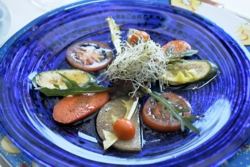
Food can be this beautiful…
Aspects of food
- Dietary patterns: rotation diet, food combining, vegetarian, vegan, mixed diet etc.
- Diets: fasting, Mayr, Buchinger, potato diet, Hollywood diet, Atkins, formula diets
- Religion: months of fasting
- Symbolic (cf. Holy Communion)
- Eating differently in company or as a single person
- Healing: stomach-sparing diet, liver-sparing diet and others
- Weight-regulating
- Food for constipation
- Classification by calories
- Requirements by age
- Requirements in pregnancy and while breastfeeding, heavy manual workers, athletes
- Allergy triggers
- 5 elements and relation to the seasons, energetics, direction of action, thermal behaviour
- Acid–base balance
- Laevorotatory & dextrorotatory food components
- Geared to content for gout (uric acid), cholesterol, histamine, gluten, sugar
- Luxury foods and stimulants
- Degree of processing, additives
- Sterility (Foods also bring other living beings into our organism, both welcome and unwanted ones such as bacteria, viruses, parasites and worms.)
- Shelf life (The longer it keeps, the less well we can make use of it, too!)
- Processing by genetic engineering
- Pollutant content
It is not the purpose of this information to set out nutrition in detail. There is a wealth of good literature for that. Rather, it is intended to sharpen awareness and recognition of the diversity, significance and individuality of the personal need for food, and to help food take its rightful place both in health and in illness
Left
Schweizerische Gesellschaft für Ernährung Verein für Unabhängige Gesundheitsberatung, UGB